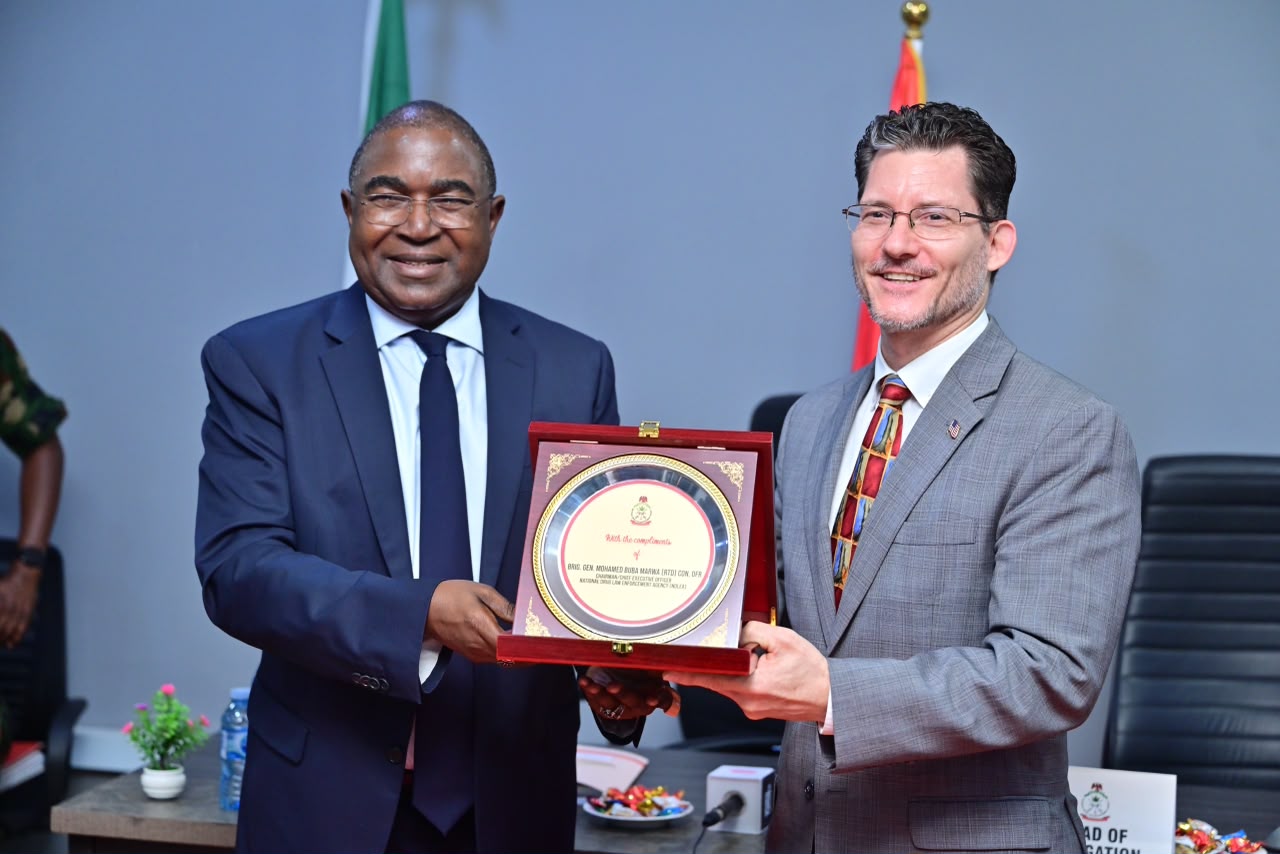
Gonzales, who took the helm at the INL bureau four months ago, revealed that Nigeria was his intentional first destination due to its towering status as a continental leader and economic powerhouse. Driven by the agency’s string of high-profile operational victories, the U.S. envoy emphasized that he specifically wanted to see “firsthand where the magic happens.
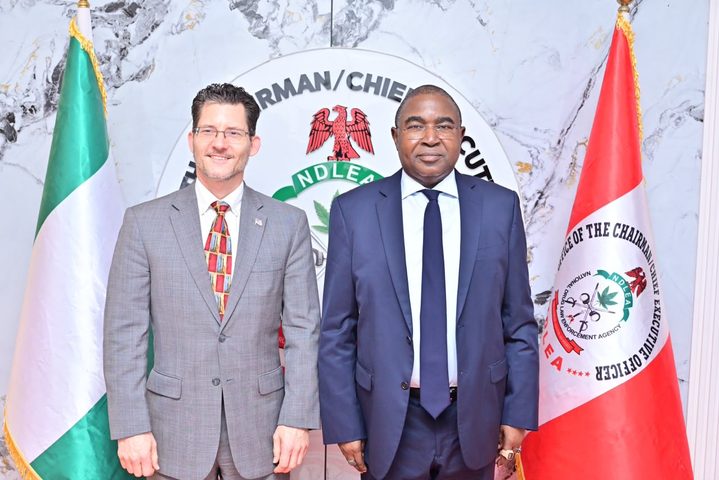
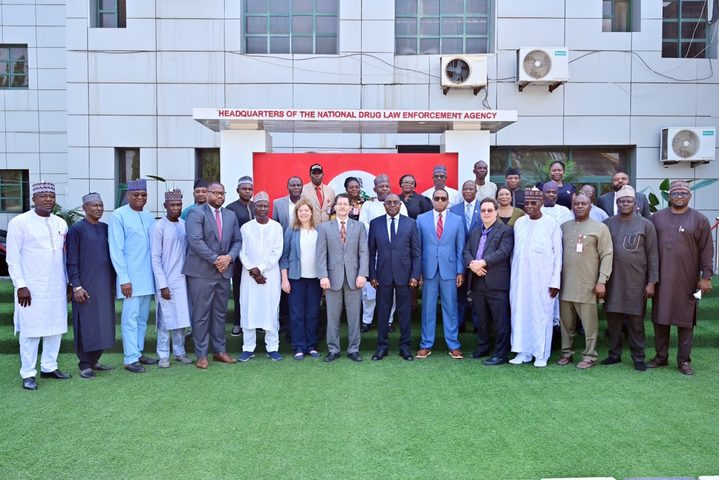
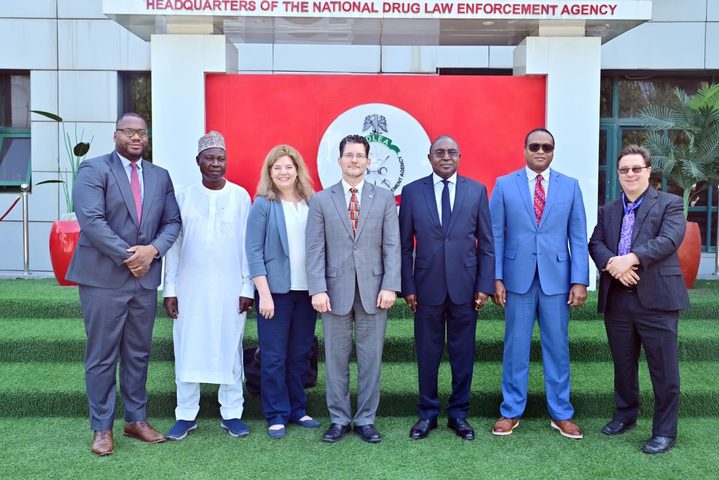
The high-level endorsement was detailed in a Tuesday, October 20, 2026 statement by NDLEA spokesperson Femi Babafemi. Gonzales shared his assessments earlier that day at the NDLEA National Headquarters in Abuja, where he was hosted by Chairman/CEO Brig. Gen. Mohamed Buba Marwa (Rtd) and the agency’s top leadership cadre.
Stepping into his role just four months ago, Gonzales explained that Nigeria’s vast economic influence and the NDLEA’s relentless track record made it the definitive choice for his maiden continental tour. He noted that the agency’s masterful disruption of illicit networks compelled him to travel to Abuja to witness “firsthand where the magic happens.
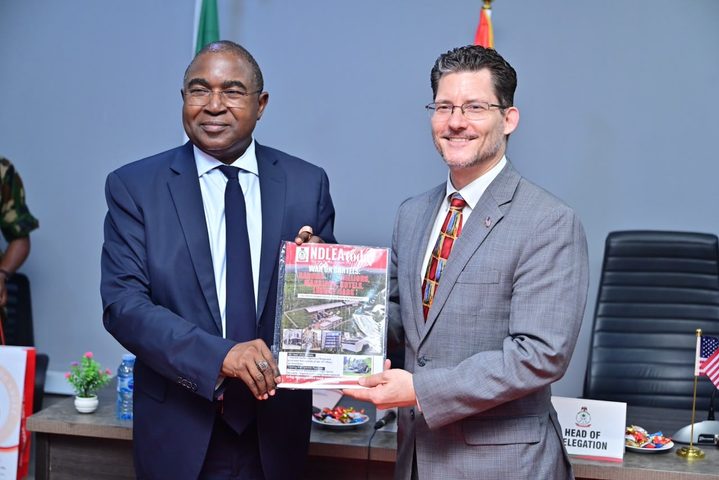
Elaborating on his strategic decision, Gonzales remarked, “I became the Deputy Assistant Secretary of State for International Narcotics and Law Enforcement just four months ago covering all countries of Africa and the Middle East. And when I was thinking where does it make the most sense to visit first, Nigeria was a clear answer. Because as a leader, as an economic powerhouse on the continent, but also particularly NDLEA for the leadership and the impressive wins that you and your team and your interagency counterparts have delivered time and again.”
He added that beyond cementing the existing, robust partnership between the INL and the agency, he wanted to see “firsthand where the magic happens, as we say in the United States.”
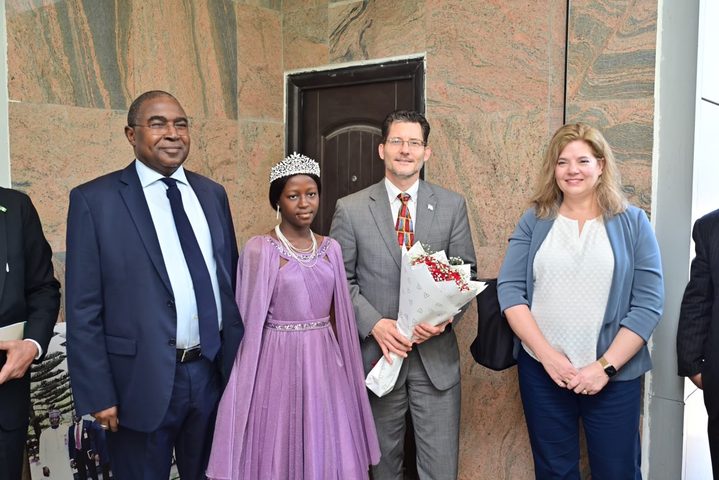
The visiting U.S. envoy singled out the dismantling of four methamphetamine laboratories this year as undeniable proof of the NDLEA’s elite tradecraft. He categorized these breakthroughs as a masterclass in intelligence-led investigations, seamless cross-border coordination, operational precision, and rigorous prosecution.
Underscoring the global threat, Gonzales emphasized that narcotics jeopardize American communities more tangibly than almost any other foreign policy issue, noting that the modern drug trade operates across international borders with virtually zero constraints. Consequently, the synergy between the INL and the NDLEA “fundamentally delivers for the Nigerian people, for the American people.”
Validating the agency’s methodologies, he concluded: “The four meth lab busts just this year alone is a testament to the deployment of some of the best practices in our tradecraft, the intelligence-based knowledge collection, the coordination across national lines and agency lines, the operational excellence that goes into the actual bust, and then the interrogations, the investigations and prosecutions. They’re all so critical because ultimately counter-narcotics work, the work that each of us does day in and day out truly delivers for the people.”
Further highlighting the human cost of the crisis, Gonzales remarked: “When I am talking to American audiences in the United States, I tell them there’s virtually no other issue of foreign policy that so tangibly affects the lives of every community, virtually every family across our country, than narcotics. And the reality of the narcotics trade is one that is international. It knows no boundaries, very few constraints. And so, the work that INL does in the United States and globally and the work that NDLEA does fundamentally delivers for the Nigerian people, for the American people.
Gonzales noted that the INL’s four-decade-old global partnership has materialized in Nigeria through specialized tactical training and critical equipment donations. He warned that intense U.S. pressure on Western Hemisphere cartels has triggered a “squeezing a balloon” effect—effectively redirecting trafficking corridors straight toward Africa as a transit hub for Europe and Oceania. He also flagged the dangerous evolutionary shift from plant-based narcotics to deadlier, harder-to-detect synthetic drugs, advocating for a relentless assault on the financial arteries that keep these transnational criminal networks breathing.
Responding to the U.S. delegation, NDLEA Chairman Brig. Gen. Mohamed Buba Marwa (Rtd) framed the agency’s deep institutional ties with both the INL and the U.S. Drug Enforcement Administration (DEA) as a vital, shared investment in transatlantic collective security.
“Crime has no borders, and neither does the threat,” Marwa declared. “The drugs we seize, the arms we intercept and the terrorist financing we trace are not separate problems. When we seize narcotics and illicit weapons in the same operations and along the same routes, we are looking at the convergence of crime. Drug money buys guns, guns sustain armed groups, and armed groups sustain terrorism. Terrorism has no borders. What festers in the Sahel and the Lake Chad Basin does not stay there, and what is trafficked through West Africa does not stop at our coastline.”
Exposing the sheer scale of the transnational threat, Marwa revealed the agency’s direct clash with global syndicates: “The Mexican cartel threat is real, and we are confronting it. In recent months, NDLEA operatives dismantled the largest clandestine methamphetamine laboratory ever discovered in Nigeria, in a forest in Ijebu East, Ogun State where we arrested three Mexican meth experts and their Nigerian collaborators right in the forest where illicit substances worth over $360 million US dollars were recovered.
”Barely four weeks later, we raided another industrial-scale laboratory at Tapa Village in neighbouring Oyo State and arrested a Mexican methamphetamine expert, brought in for large-scale synthesis, together with four Nigerian collaborators. We have since dismantled a similar facility in Enugu State and another in Ebonyi state, South East Nigeria, all linked to the Mexican cartels.
“These were not isolated incidents. They show a deliberate attempt to turn Nigeria into a manufacturing hub.”
Marwa underscored the geopolitical stakes of the operations, outlining how international pressure is shifting the battlefield: “Let me be plain about why this matters to Washington. These cartels are not setting up in our forests to supply Nigerian consumers alone. They want a West African corridor to ship industrial quantities of methamphetamine to Europe, to Asia, and to American cities. Especially taking into consideration the President Trump hammer that is smashing cartel traffic enroute America.
“These cartels are now seeking alternative routes to get to the same America. Every Meth producing laboratory that we shut down is a supply line that never reaches an American street, and every cartel operative we arrest is one fewer in the pipeline.
“Our forensic chemists, our investigators and our tactical teams are, in effect, forward defence for communities in the United States.
The NDLEA boss noted that the agency’s advanced capabilities—spanning forensic chemical analysis, specialized professional training, financial-crime asset tracing, and high-tech equipment maintenance—are fundamentally underpinned by INL assistance.
“This great partnership has fueled our offensives that yielded the arrest of 96,157 drug offenders including 250 drug barons, the seizure of over 15.8million kilograms of assorted illicit drugs and conviction of 16, 691 drug traffickers including the kingpins, in the last five years,” Marwa added, underscoring the massive return on Washington’s investment.
Issuing a stark warning that any reduction in INL funding would create a dangerous security vacuum for criminal syndicates and terrorist networks to exploit, Marwa tasked Gonzales with delivering a firm message back to Washington: that INL support, “as is, should be maintained if not increased.”
Criminal networks, arms traffickers, and terrorists collaborate seamlessly across global borders every single day, Marwa concluded, meaning the governments standing against them must match that unity with equal force.