In a bold presentation at the ongoing 81st Session of the United Nations General Assembly in New York, USA, the National Drug Law Enforcement Agency (NDLEA) has spotlighted Nigeria’s overhauled drug control architecture as a definitive blueprint for institutional transformation and adaptive threat management.
The landmark submission forms part of Nigeria’s national presentation delivered under the UN assembly’s guiding theme: “Restoring Trust, Managing Transformation: A United Nations that Delivers for All.”
According to an official statement released by the NDLEA Director of Media & Advocacy, Femi Babafemi, the strategic address was presented before the UN Assembly on Monday, 12th October 2026, on behalf of the NDLEA Chairman/Chief Executive Officer, Brig. Gen. Mohamed Buba Marwa (Rtd).
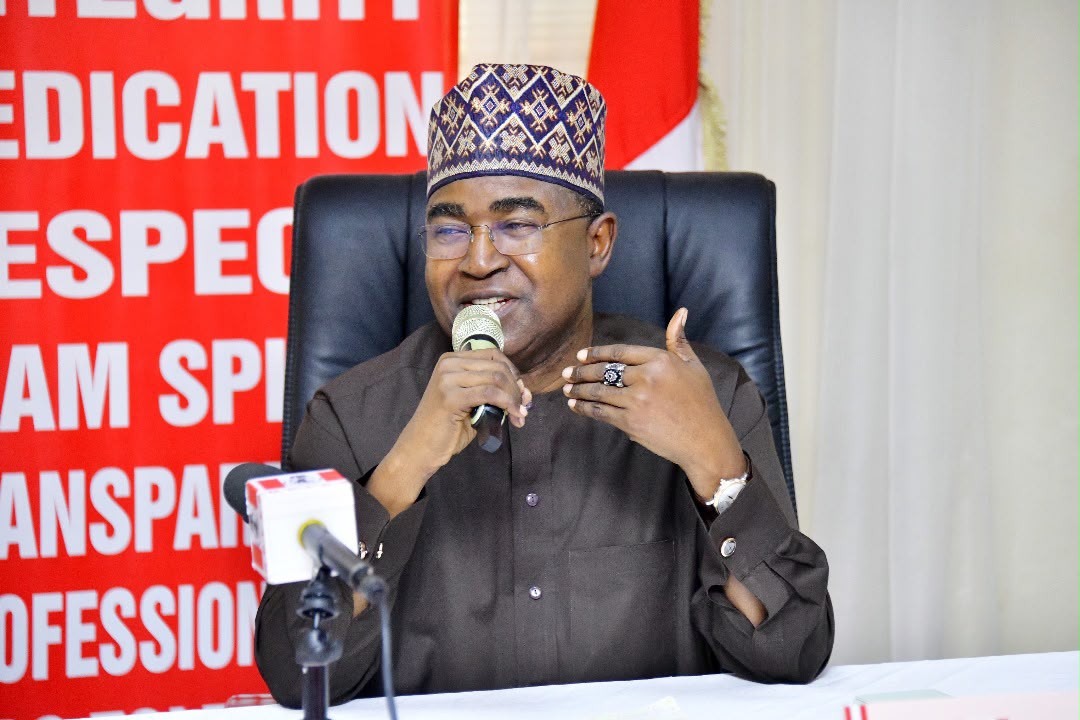
Delivering the address on behalf of the NDLEA boss, the Agency’s Secretary, Shadrach Haruna, detailed how the anti-narcotics body successfully transitioned from its historical mandate into a modern, multi-dimensional entity.
Marwa informed the global assembly that the NDLEA has evolved from a predominantly enforcement-focused organisation into an integrated, intelligence-led and people-centred body that brings together law enforcement, public health, technology, financial investigation, alternative livelihoods and international cooperation to achieve amazing results.
Highlighting the urgency behind Nigeria’s strategic shift, Haruna explained that the evolution was a direct response to a rapidly changing and complex criminal landscape.
“Trafficking networks have become more sophisticated, technology has opened new channels for illicit activity, criminal proceeds move rapidly across borders, and drug dependence continues to affect individuals, families and communities,” he stated.
“Nigeria therefore broadened its focus from drugs and offenders alone to the criminal networks, illicit profits and vulnerabilities that sustain the drug economy.”
This multi-pronged strategy has delivered unprecedented dividends across both supply elimination and demand reduction nationwide.
According to the agency, a highly successful 21-month crackdown between January 2025 and September 2026 yielded staggering operational milestones:
- 38,242 total arrests.
- Over 5.8 million kilograms of illicit drugs intercepted.
- ₦2.5 trillion ($1.5B+) in total street-value financial seizures.
- 6,232 successful court convictions secured against traffickers.
Beyond enforcement, the agency’s humanitarian and preventive footprint saw more than 16,303 individuals receive critical counselling, treatment, or rehabilitation over the same period, while grassroots sensitisation initiatives successfully reached millions of citizens.
The NDLEA boss emphasised that Nigeria’s primary objective has aggressively shifted toward dismantling high-level kingpins, organized crime syndicates, and the financial lifelines powering the trade, moving away from tracking progress solely through baseline arrests and seizures.
A key pillar of this strategy includes the agency’s pioneering Alternative Development initiative, currently being piloted across three communities in Ondo State.
The program actively empowers local residents to transition away from illicit cannabis cultivation into legitimate agricultural production. Sustainable drug control, Marwa noted, requires more than just uprooting an illicit crop—it demands credible economic alternatives that simultaneously fortify food security, community resilience, and national security.
In tandem with economic reforms, the NDLEA is leveraging cutting-edge digital infrastructure, citing its newly deployed Drug Integrity Test and Visa E-Administration System as definitive blueprints for boosting transparency, efficiency, and integrity in public administration.
The global assembly heard that these sweeping reforms are currently being locked into the National Drug Control Master Plan (2026–2030), a robust framework anchored on six core pillars:
- Drug supply reduction
- Drug demand reduction
- Regulated access to controlled medicines
- Governance and coordination
- Alternative development
- Disruption of the illicit drug economy.
Stressing that restoring trust demands concrete execution while managing transformation dictates strategic alliances, Nigeria issued a firm, multi-point charge to the international community.
The delegation demanded a unified global front to:
- Sharpen Intelligence-Sharing: Solidify real-time international intelligence pipelines to prevent criminal cartels from exploiting jurisdictional gaps.
- Choke Illicit Finances: Intensify aggressive crackdowns on the shadow economy via advanced financial investigations, asset tracing, and total recovery.
- Balance Enforcement with Care: Strengthen proactive prevention, medical treatment, rehabilitation, and social reintegration frameworks alongside active law enforcement.
- Fund Alternative Livelihoods: Expand deep financial and structural backing for Alternative Development programs so transitioning communities secure permanent, legal income.
- Upgrade Tactical Capacity: Substantially fund law enforcement capacity building to decisively outmatch the evolving sophistication and technological innovations of international drug cartels.
- Invest in Developing Institutions: Channel strategic investments into public institutions within developing nations through technology transfers, tactical training, forensic upgrades, treatment infrastructure, and sustained technical assistance.
Framing its domestic strategy as an evolving journey rather than a static model, Nigeria affirmed its absolute readiness to share architectural blueprints, learn from global peers, and collaborate with Member States and the United Nations. The delegation concluded with a powerful call to pivot decisively from policy commitment to raw implementation, moving from basic cooperation to absolute collective action.