By: Philip B. Olusola
Lead City University, Ibadan
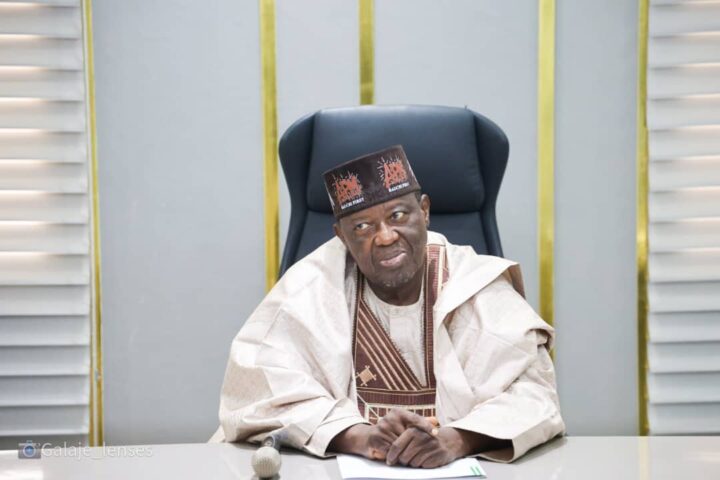
In what appears to be another strategic step toward institutional continuity and administrative stability, the Ondo State Government has appointed Engr. Dr. Lawson Olorunwa as the Acting Rector of Rufus Giwa Polytechnic (RUGIPO), following the stepping aside of Dr. Simeon Olorunwa Adegun upon attaining the statutory retirement age of 65.
The development reflects a commitment to sustaining governance structures within the institution while ensuring that the momentum of leadership is not disrupted. It also offers an opportunity for renewed focus on the pressing issues that continue to define the Polytechnic’s reality.
Dr. Adegun’s exit marks the close of a significant phase in the institution’s leadership journey. His stewardship during a challenging period attracted commendation from many stakeholders who saw in him a stabilising figure committed to institutional progress. Notably, his administration pursued the full payment of monthly salaries whenever allocations were released, marking a clear departure from the old pattern of fractional payments such as 16 per cent, 50 per cent or 70 per cent salaries. Though salary disbursement was not always regular due to funding constraints, he consistently sought ways to augment available resources to ensure workers received their salaries in full. His contributions to restoring confidence, preserving administrative order, and advancing the interests of the Polytechnic remain worthy of acknowledgement.
The emergence of Engr. Dr. Lawson Olorunwa, therefore, comes at a critical moment. As Acting Rector, he inherits not only the responsibility of sustaining recent gains but also the task of navigating longstanding structural and welfare concerns that require urgent and coordinated attention.
Beyond the symbolism of leadership transition lies a deeper truth: the challenges confronting RUGIPO are systemic, and their solutions cannot rest solely on the shoulders of any Rector, however competent or committed.
While the payment of salary arrears to serving staff in recent times has provided some relief, it addresses only part of a broader welfare challenge. The more enduring test remains the plight of retirees – individuals who dedicated the prime of their lives to the service of the institution and now deserve dignity, security and timely support in retirement.
Outstanding gratuities, pension arrears, delayed pension adjustments amid rising economic realities, and unresolved salary liabilities continue to weigh heavily on many former staff members. Particularly troubling is the issue of the widely acknowledged 16-month salary arrears, which affected numerous workers, some of whom have since retired. For many of them, delayed justice has translated into prolonged hardship.
Yet, this situation need not be seen as beyond remedy. What appears long neglected can still be redeemed through deliberate intervention, courageous leadership, and genuine political will. With strategic collaboration between the institution’s management, the Ministry of Education and the Ondo State Government, there remains a credible pathway toward restoring hope to affected workers and retirees.
These are not merely administrative obligations; they are moral responsibilities that demand urgency and sincerity.
Interestingly, the Honourable Commissioner for Education, Prof. Ajibefun, is not unfamiliar with the complexities surrounding these issues. His previous efforts toward addressing aspects of the backlog were widely noted, even where outcomes fell short of expectations. There is, therefore, a legitimate expectation that, under his supervision as Commissioner overseeing tertiary institutions in the state, practical and time-bound steps will be taken to bring lasting relief to both serving and retired staff.
Nonetheless, responsibility must be collective and primarily government-driven. The sustainability of any tertiary institution depends fundamentally on the strength of its funding framework. Expecting institutional leadership to deliver optimum results without adequate financial support is neither realistic nor equitable.
To actually empower the new Acting Rector, the Ondo State Government must deliberately strengthen subventions to the Polytechnic and improve budgetary allocations. This is essential not only for the regular payment of salaries but also for the structured settlement of gratuities, pensions, and other outstanding liabilities.
A robust funding architecture will ease administrative bottlenecks, reduce industrial tensions, and create an enabling environment for academic excellence, infrastructural renewal, and humane governance. It will equally send a clear message that the welfare of workers, past and present, remains a priority rather than an afterthought.
Importantly, this is not just about RUGIPO; it reflects a broader philosophy of governance. When retirees are treated with fairness and dignity, public trust in government is strengthened, while serving workers are reassured that their years of service will not end in neglect. After all, every worker is a retiree in waiting.
For his part, Engr. Dr. Lawson Olorunwa is expected to sustain stakeholder engagement, promote transparency in administrative processes, and advocate firmly yet constructively for the institution’s needs. But even the most capable leadership requires the backing of a responsive and supportive government.
His appointment, therefore, presents a dual opportunity: for institutional renewal under steady leadership and for government to demonstrate commitment through practical and sustained intervention.
In the final analysis, the success of this new phase at RUGIPO will depend not only on the vision and administrative capacity of its Acting Rector, but also on the willingness of the government to match leadership with resources, compassion and consistent policy attention.
Only then can continuity produce progress, and service be rewarded with dignity for all.
By: Philip Bamiji Olusola
+234 8034173134
Lead City University
philipinotun@gmail.com