In a major boost for Nigeria’s maritime industry, Akutah Pius Ukeyima, Esq., MON, FCILT, Ph.D, the Executive Secretary/Chief Executive Officer of the Nigerian Shippers’ Council, announced on Thursday, April 4th, that President Bola Ahmed Tinubu GCFR has approved the commencement of the International Cargo Tracking Note (ICTN) procurement process.
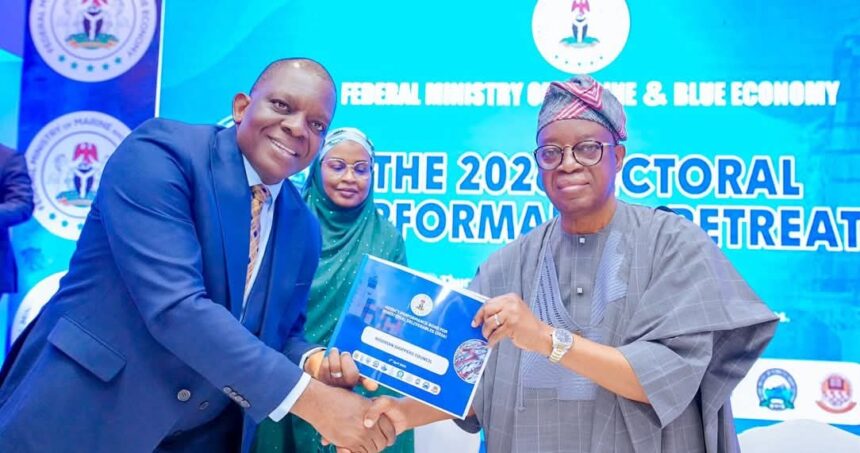
Speaking at a Ministry of Marine and Blue Economy event in Lagos, Dr. Akutah confirmed that the Council is set for the full implementation of the ICTN—a critical tool for trade facilitation.
ICTN Implementation Guaranteed by Year-End: Dr. Akutah gave this assurance while engaging with stakeholders in an interactive forum. Responding to various inquiries from the floor, the Shippers’ Council lead noted that the upcoming deployment will be a “pivotal moment” for port efficiency and national revenue;
“We have already obtained approval of Mr President to go for the procurement process for the ICTN, and that is ongoing, and we are very hopeful that before the end of this year, we should come up with the ICTN”
We are resolving the bottlenecks of the past,” Dr. Akutah remarked, noting that the ICTN has previously struggled with implementation gaps. He reassured stakeholders that Minister Adegboyega Oyetola is prioritising a ‘clean slate’ approach, ensuring every technical and administrative challenge is settled before the project officially goes live;
”All of you know that we have history of implementation, suspension and all that, so the Minister is taking all necessary steps to ensure that any other implementation under his leadership would not be suspended, so all efforts is being deployed to ensure that pending issues are all resolved before the ICTN implementation begins” the ES/CEO said
At the heart of Nigeria’s maritime reform is the ICTN, a tracking powerhouse projected to boost government coffers by ₦900 billion every year.
Although, the mandatory cargo document has navigated a rocky path—facing sustained pushback from port stakeholders over fears of increased costs—it remains the definitive solution for securing Nigeria’s maritime borders and optimizing trade revenue.