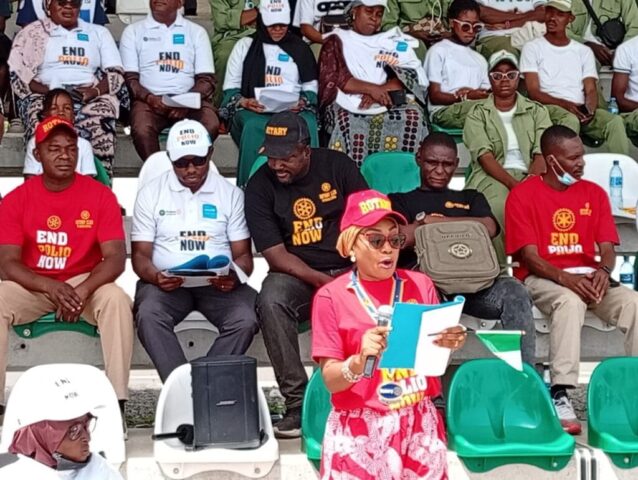

To bolster regional integration and streamline operations at the Seme-Krake axis, the Nigerian Shippers’ Council (NSC), in partnership with the ECOWAS Commission, GIZ, and the Nigeria Customs Service, hosted a landmark film screening and dialogue session in Badagry on February 25, 2026. Held under the theme “Trade Now: Empowering Cross-Border Traders through Border Information Centres,” the event used documentary storytelling to bridge information gaps and encourage traders to utilize dedicated support desks for seamless, legitimate trade.
In a recent statement issued by the Council’s Head of Public Relations, Rabecca Adamu, the Executive Secretary/CEO, Dr. Akutah Pius Ukeyima (MON), championed the theme “Trade Now: Empowering Cross-Border Traders through the Trade Information Desk (TID).” Expressing strong optimism, Dr. Akutah noted that the strategic blend of documentary film and stakeholder dialogue will mirror the success of trade initiatives at the Seme-Krake axis, ultimately driving a significant surge in legitimate trade volumes across the region.
Dr. Akutah extended his appreciation to the GIZ and the ECOWAS Commission for their pivotal roles in orchestrating the event and for their ongoing commitment to simplifying cross-border business at the Seme border. Representing the CEO, the Director of Consumer Affairs, Mrs. Ify Okolue, highlighted that the Council’s Border Information Centre (BIC) at Seme serves as a vital resource—providing traders with real-time data on tariffs, documentation, and dispute resolution to drastically reduce delays and operational costs.
While BICs are already fully operational at key border points including Seme-Krake, Jibia-Maradi, Illela-Birnin Koni, and Mfum-Nkot, the Council is rapidly expanding its reach. Mrs. Okolue confirmed that the Idiroko BIC is on track to become operational before the end of the second quarter of 2026, further strengthening the infrastructure supporting transparent and efficient regional commerce.
However, “To foster a more transparent and efficient trade ecosystem, the NSC encourages women and youth entrepreneurs to utilize Border Information Centres as a vital tool for compliance and regional growth.
ECOWAS Trade Director, Kolawole Sofola, has called for a renewed focus on trader education at the Seme Border, highlighting that clear documentation and dispute resolution are the bedrocks of smooth regional trade. Speaking through Sarah Okporufe, he urged that sensitization efforts evolve to include gender-inclusive policies and e-commerce, ensuring that no trader—regardless of gender or business size—is left behind in the digital age.
A key concern raised by the ECOWAS delegation was the underutilization of the ECOWAS Trade Liberalization Scheme (ETLS). Despite its potential to eliminate Customs tariffs on regional goods, many traders remain unaware of its benefits. The Commission is now pushing for greater awareness to ensure that “Made in West Africa” goods can move across borders duty-free, as intended by regional policy
“Another right that traders have is that as soon as they have a valid passport, they can move to any ECOWAS country to reside or transact business. There is a process to have a biometric ECOWAS identity card that we expect will be adopted by Nigeria to allow traders and residents enjoy better access for businesses and other purposes,” the ECOWAS said.
On behalf of the Comptroller-General of the Nigeria Customs Service (NCS), Bashir Adewale Adeniyi, MFR, the Customs Area Controller of the Seme Border Command, Comptroller Wale Adenuga, issued a bold commitment to efficiency: a 40-hour maximum turnaround time for processing all legitimate imports and exports via the Seme Border.
Comptroller Adenuga emphasized that trade facilitation is the cornerstone of the NCS under the current leadership. He reaffirmed the Service’s unwavering support for compliant stakeholders, pledging to continuously streamline operations at the Seme Border to ensure that legitimate business remains the priority.
To avoid costly delays, he urged traders to proactively engage with Seme Customs and the Border Information Centres (BICs). By seeking expert guidance on documentation, applicable duties, and prohibited items, traders can ensure their operations remain fully compliant and seamless.
“At Seme Customs, we will give you adequate information and adequate support. We want traders and border residents to engage in legitimate trade. We don’t tolerate illegitimate trade. We have engaged with our counterparts in Seme as well as other security agencies to ensure a seamless corridor for trade,” Adenuga said.
The session featured a compelling documentary—presented in both Yoruba and English—that artfully captured the real-world challenges and expectations of traders navigating regulatory frameworks along the Seme-Krake border corridor