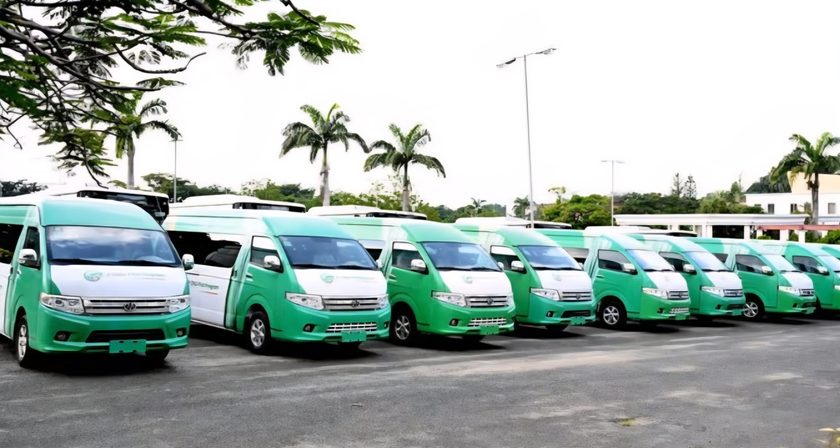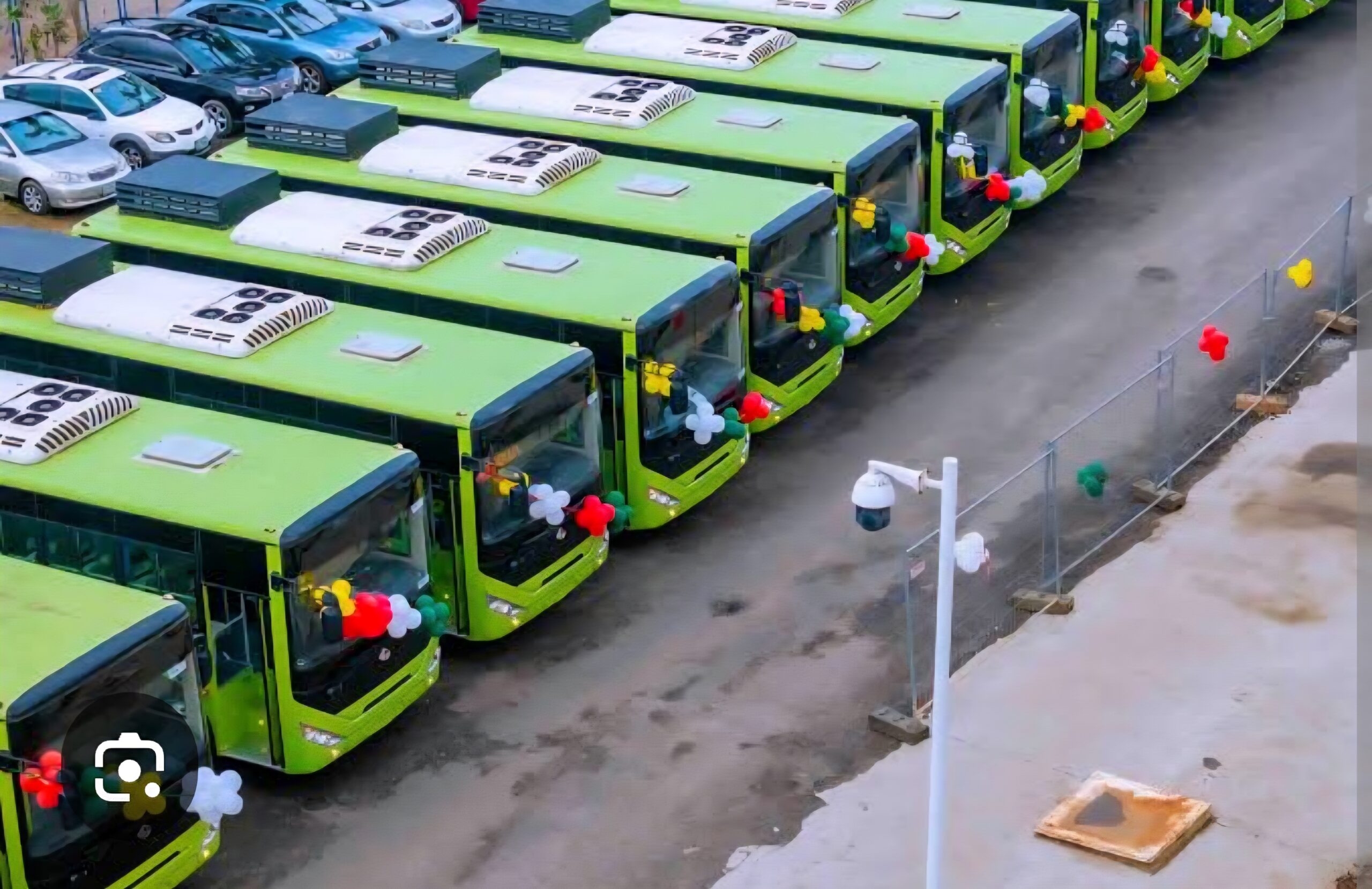
Nigerians are finally getting a breather from skyrocketing transportation costs as the Presidential Initiative on Compressed Natural Gas and Electric Vehicles (Pi-CNG & EV) rolls out massive fare cuts across several states.

According to a report by the News Agency of Nigeria (NAN), the initiative’s interventions are already reshaping critical transit corridors, particularly in Enugu, where commercial and residential routes are seeing drastic price slashes.
“They serve busy routes, including Enugu–Nsukka, ESUTH–Agbani, Enugu–UNTH, Holy Ghost–Emene, and other commercial and residential corridors,” a representative stated.
“The Enugu–Nsukka route, which previously cost commuters between N3,000 and N4,000, was initially reduced to N2,200 and now costs N1,600 on the CNG-supported service.”
The program’s coordinator, Ahmed, revealed that the Federal Capital Territory (FCT) is experiencing similar financial relief.
For instance, on the busy Kubwa–Berger route, commuters using CNG buses pay N500—exactly half the N1,000 fare charged by traditional diesel buses.
Apo–Nyanya/Maraba commuters are also paying N500 instead of N1,000.
Additionally, the “Masaka–Berger costs N600 on CNG compared with N1,000, while Berger–Gwagwalada costs N700 compared with N1,200.”
Beyond the capital city, the initiative is actively collaborating with the Ebonyi State Government to map out essential infrastructure for its upcoming CNG and electric mobility deployment.
Looking ahead, the Pi-CNG & EV plans to scale up its impact rapidly.
“Beyond existing services, Pi-CNG & EV is deploying another batch of buses that will operate with demonstrable fare reductions on designated routes,” Ahmed added.
Out of the 61 buses currently allocated for commercial operations nationwide, the FCT, Kano, and Lagos take the lion’s share with 13 buses each. Delta, Kaduna, and Katsina follow with five buses each, while Enugu receives three. Borno and Niger round out the distribution with two buses apiece.
“Conversion activity is increasing significantly in emerging markets such as Kano and the South-East, alongside established CNG markets in other parts of the country. New refuelling stations are also coming onstream regularly.
“Pi-CNG & EV is working with industry partners towards having about 150 operational CNG refuelling stations before the end of 2026,” he said.
Rather than a final milestone, the program’s coordinator, Ahmed, emphasized that the October 1 target is merely the launchpad for a much larger, expanding nationwide program.
Far from a one-off intervention, the initiative is laying the groundwork for long-term economic relief.
“Pi-CNG & EV will continue working with relevant stakeholders to expand CNG refuelling and EV charging infrastructure to ensure that savings from cheaper energy are reflected in transport fares,” Ahmed assured.