Nigeria spent a staggering $866 million on frozen fish and seafood imports in 2025 alone, highlighting a severely widening gap between the country’s enormous fisheries potential and its capacity to meet domestic seafood demand.
The Director-General of the International Maritime Institute of Nigeria (IMION), Rear Admiral Thaddeus Christopher Udofia (Rtd), Ph.D., disclosed this on Wednesday, September 30, 2026. He was delivering a high-level goodwill message at the National Conference on Sustainable Fishing, organised by the Maritime Correspondents’ Organisation of Nigeria (MARCON) at the Rockview Hotel in Apapa, Lagos.
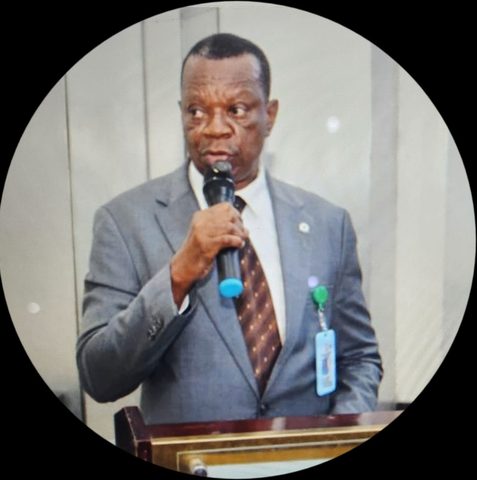
Speaking before top government functionaries, scholars, and industry captains, Admiral Udofia addressed the conference theme: “Sustainable Fishing in Nigeria: Pathways to Growth, Food Security, and Coastal Livelihoods.”
According to the IMION Director-General, authoritative data from the United Nations Commodity Trade Statistics Database (UN COMTRADE) exposes a troubling upward trajectory for the nation’s finances. Nigeria’s frozen fish and seafood imports climbed aggressively from $606 million in 2023, jumped to $688.5 million in 2024, and ultimately peaked at the $866 million mark in 2025—representing a severe, ongoing drain on scarce foreign exchange.
Rear Admiral Udofia described this severe economic leak as a profound paradox. Nigeria possesses an expansive maritime domain, with rich fisheries resources stretching across its 853-kilometre coastline, sprawling inland waterways, creeks, estuaries, and the high-yielding Niger Delta Basin.
He emphasized that the national challenge is no longer about the mere availability of aquatic resources, but the country’s capacity to sustainably manage and convert this natural wealth into food security, employment, and macroeconomic opportunities.
“Our inability to translate the abundant fisheries resource endowment into seafood sufficiency, and by extension, food security, is the paradox which this conference seeks to unravel,” Admiral Udofia pointed out.

To bridge this gap, the IMION boss identified an “existential triad” of threats systematically undermining the sustainability of Nigeria’s fisheries sector: aggressive overfishing, accelerating climate change, and the devastating plague of Illegal, Unreported, and Unregulated (IUU) fishing.
The Director-General raised the alarm over highly destructive fishing practices, particularly the illegal operations of industrial trawlers operating like “predatory ghosts” within Nigeria’s Exclusive Economic Zone (EEZ). These vessels systematically flatten vital benthic marine habitats, drastically reducing the catch available to artisanal fishermen and vulnerable coastal communities.
He stressed that the consequences of this maritime plundering extend far beyond the borders of the fishing industry. Declining catches directly worsen national food insecurity and place violent economic pressure on coastal households, forcing families beneath the poverty line.
To halt this decline, Admiral Udofia called for immediate, robust regulatory synergy and coordination among maritime security agencies—specifically expanding the Nigerian Navy’s anti-piracy successes into the fisheries domain—alongside fisheries
Advocating for a data-driven approach, the IMION chief insisted that sustainable management cannot be driven by guesswork. Proffering a comprehensive Five-Pillared Strategic Blueprint, he urged policy frameworks to follow a credible scientific backbone, calling on research institutions like the Nigerian Institute for Oceanography and Marine Research (NIOMR) and IMION to provide empirical data on stock assessments to guide catch limits, closed seasons, and marine protected areas.
To transition Nigeria from a vulnerable state to long-term sustainability, Admiral Udofia mapped out the following structural framework:
- Aggressive Aquaculture Transition: Accelerating massive investments in technologically driven fish farming to reduce pressure on wild fish stocks. He highlighted the scalability of modern cage culture systems in coastal lagoons as predictable economic avenues for youths and women, stating: “We must transition aggressively from wild-capture fisheries to technologically driven aquaculture.”
- Cold-Chain & Infrastructure Upgrade: Eliminating massive post-harvest losses by heavily investing in modern processing facilities, storage infrastructure, and technical capacity building through specialized maritime academies.
- High-Tech Surveillance Integration: Deploying advanced Vessel Monitoring Systems (VMS), satellite surveillance, and digital data systems to monitor real-time harvests. The DG noted that Nigeria cannot manage what it does not measure.
- Community-Based Management (CBFM): Institutionalizing localized governance by granting coastal communities a meaningful, legal role in protecting their own fishing grounds. “When communities possess a legal, vested ownership stake in the health of their marine environment, they naturally become our frontline defence against destructive practices,” he stated.
- Economic Diversification for Coastal Youths: Developing capacity-building frameworks to equip coastal youths with alternative blue economy skills, including marine entrepreneurship, eco-tourism, boat building, and specialized technical services.
Concluding his high-level remarks, Admiral Udofia charged public and private sector stakeholders to move aggressively past mere policy declarations and conference resolutions toward practical, disciplined execution.
He called on academia for actionable research, financial institutions to structure accessible credit for artisanal fishing cooperatives, and regulators to fiercely enforce existing maritime laws.
“Let us protect our waters and fisheries resources therein, so they may protect our future,” Udofia charged.
Reaffirming the commitment of IMION, the Director-General pledged the institute’s continuous deployment of research, capacity-building, and governance support to transform Nigeria’s fisheries into a resilient pillar of national food security and the broader Blue Economy agenda.