
Without efficient logistics, the full potential of the blue economy remains trapped at the coastline, impacting the movement of goods and services across the maritime environment, the Director-General, International Maritime Institute of Nigeria (IMION), Rear Admiral Thaddeus Udofia (rtd), has said.
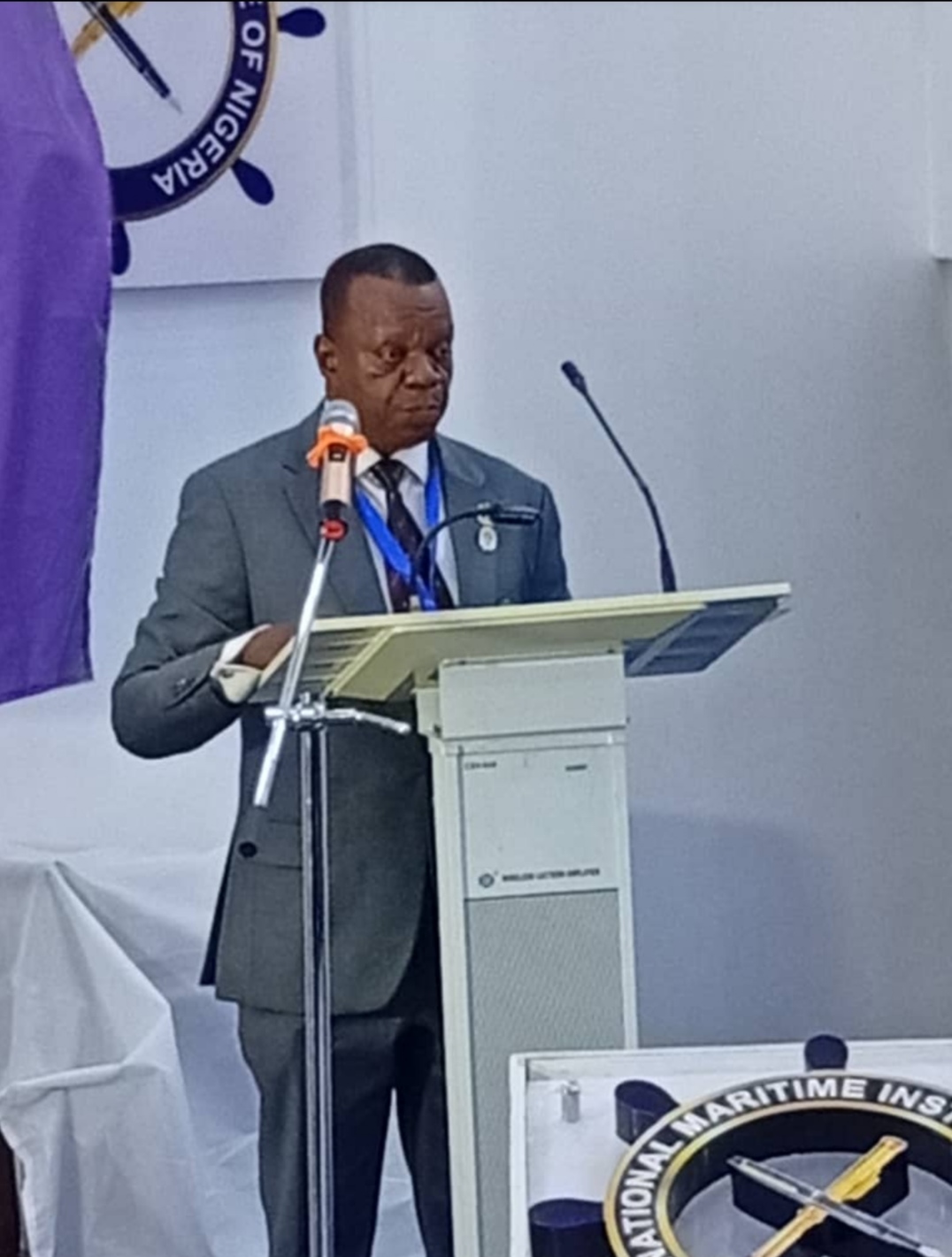
Speaking on Monday at the IMION Auditorium, NNS Quorra in Apapa, Lagos, Rear Admiral Thaddeus Udofia (rtd) declared open a three-day executive training on “Logistics and Trade Facilitation for Blue Economy Growth.”
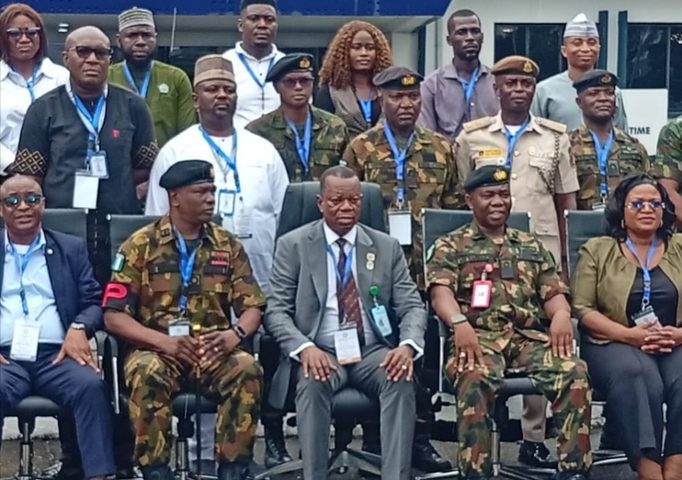
Addressing stakeholders, the IMION Director-General described logistics as “the backbone of the maritime industry,” emphasizing that it actively drives 80 to 90 per cent of all global sea-borne trade.
According to Udofia, “the blue economy invariably represents one of the most significant opportunities for sustainable economic growth, job creation, trade expansion, and regional integration, not only in Nigeria but the African region as a whole.”
He explained that the training is aimed at facilitating the movement of goods and services in the blue economy ecosystem, and to drive enhanced national development through industry knowledge and practical insights on logistics, among others.
Udofia noted that Nigeria is endowed with an expansive maritime domain very rich in both living and non-living resources, including a long coastline spanning approximately 420 nautical miles, translating to about 853 kilometers along the Atlantic Ocean, and projecting 200 miles seaward to encompass the exclusive economic zone.
“Our maritime domain also includes vast networks of inland waterways, creeks, estuaries, and the Niger Delta basin. The seas, waterways, ports, fisheries, coastal resources, and maritime services, therefore, constitute enormous economic assets,” he stated.
Nevertheless, the IMION chief said, “the ability to convert these enormous assets and potential into sustainable prosperity depends greatly on how efficiently we move people, goods, information, and services across our vast maritime and trade corridors.”
Listing logistics and trade facilitation as the major challenge, the former military chief insisted that “efficient logistics reduces the cost of doing business, improves competitiveness, strengthens supply chains, and increases the ability of our ports and maritime corridors to support international trade.”
However, effective trade facilitation requires cooperation and coordination among several specialised stakeholders, including customs, port authorities, regulatory agencies, shipping companies, freight forwarders, transport operators, technology providers, and financial institutions, among others, he said.
Consequently, he told the participants and stakeholders that the future of the blue economy requires greater collaboration, digitalisation, transparency, interoperability, and coordinated trade policy implementatio
Therefore, he said the training will deepen the understanding of modern logistics systems, customs procedures, port operations, multimodal transportation, supply chain management, and contemporary approaches to trade facilitation.
He further urged the participants to approach the training as an opportunity to share experiences, challenge existing practices, develop solutions, and build lasting professional networks, stating that “when these perspectives come together under the triple helix concept, we can develop solutions that are both ambitious and implementable.
He listed the key learning objectives of the programme to include understanding the foundational principles of the blue economy and its logistics, mapping Nigeria’s key maritime corridors and understanding how infrastructure and logistics shape economic outcomes, among others.
For the Dean, School of Transport and Logistics, Lagos State University, Prof. Ogochukwu Ugboma, the components of the blue economy, including maritime trade, coastal resources and tourism, have no value on their own without a logistics framework to unlock it.
Explaining that framework is essentially about movement, she stressed, however, that information and financial flow are equally critical, adding that often, these invisible elements can constrain the physical movement of cargo, goods, people, or tourism activity.
Ugboma, who was a training facilitator at the programme, further noted that while facilities like the Lagos Port Complex and Tin Can Island Port Complex may be functioning well, efficiency cannot be measured by terminal performance alone but also by connectivity, including access roads and gate turnaround times.
She regretted that only about 30 per cent of Nigeria’s extensive inland waterways of 10,000 kilometres, which span 28 of the nation’s 36 states, are navigable and constitute a major challenge instead of supporting efficient intermodal transportation.
She also called for stronger collaboration among government agencies, private-sector operators and other stakeholders, noting that fragmentation still produces poor end-to-end performance.
Meanwhile, the Director-General of the African Centre for Supply Chain Management, Dr. Obiora Madu, said Nigeria loses huge sums annually to port inefficiencies. He stressed that the course would push the conversation toward seeing ports as corridors rather than mere gateways into the economy.
According to Madu, who was a resource person at the programme, a port amounts to little if its hinterland connection is weak, as supply chains are end-to-end and must function flawlessly.
He noted that though cost reduction is important in supply chain management, customer service is the ultimate priority, adding that all costs that importers incur from port congestion and related issues are ultimately passed on to the customer.
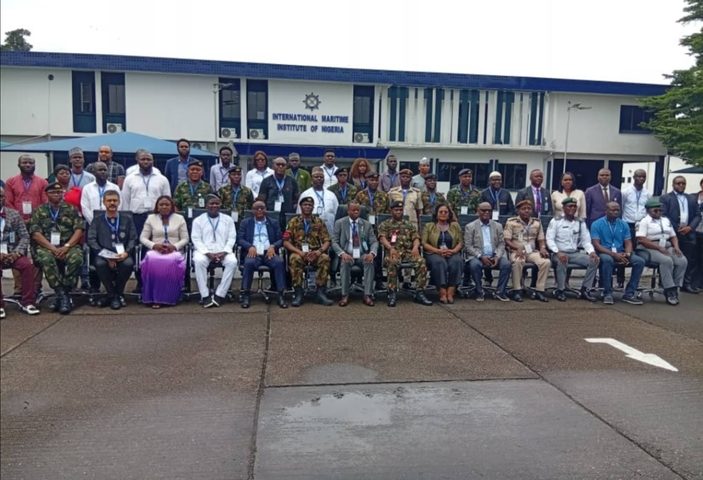
Participants at the event included the Nigerian Ports Authority, Nigeria Customs Service, Nigerian Ports Economic Regulatory Agency (NPERA), Nigerian Navy, SIFAX Group, and freight forwarders, among others.
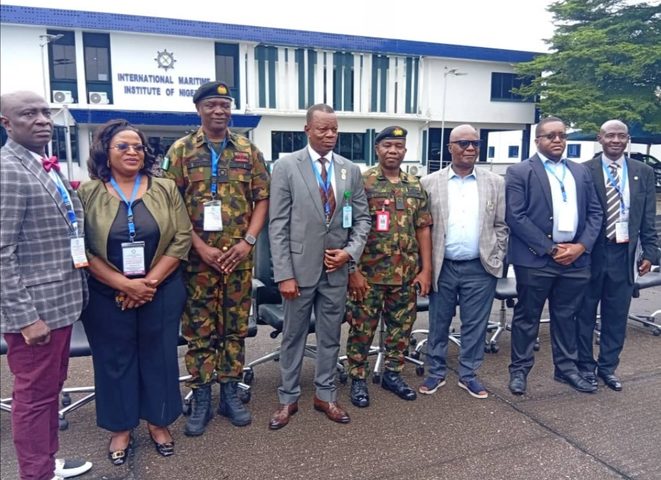
The high-impact program drew diverse participants from the maritime and blue economy sectors, supply chain networks, Ministries, Departments, and Agencies (MDAs), and aviation. Attendees highly commended the practical depth of the sessions, which run through Tuesday and Wednesday, August 9th.