
……Stop Outsourcing Justice: Oyetola Insists Nigerian Courts Must Anchor Global Shipping Battles
The Federal Government declared on Wednesday, July 22, 2026, that an efficient and credible maritime justice system is vital to unlocking Nigeria’s multibillion-dollar blue economy potential. Speaking in Abuja, the government emphasized that attracting global investor confidence depends entirely on the judiciary’s capacity to resolve complex commercial shipping disputes with fairness, speed, and absolute transparency.

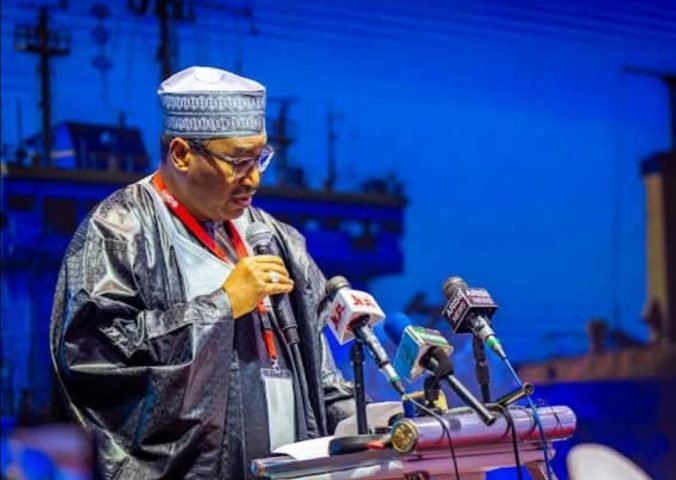
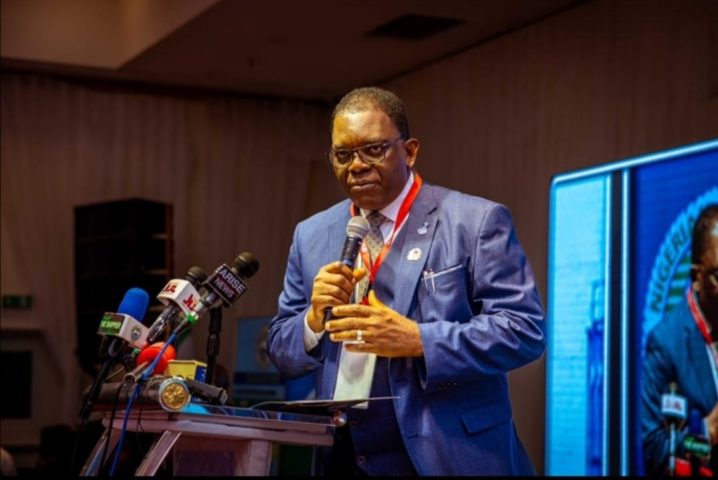
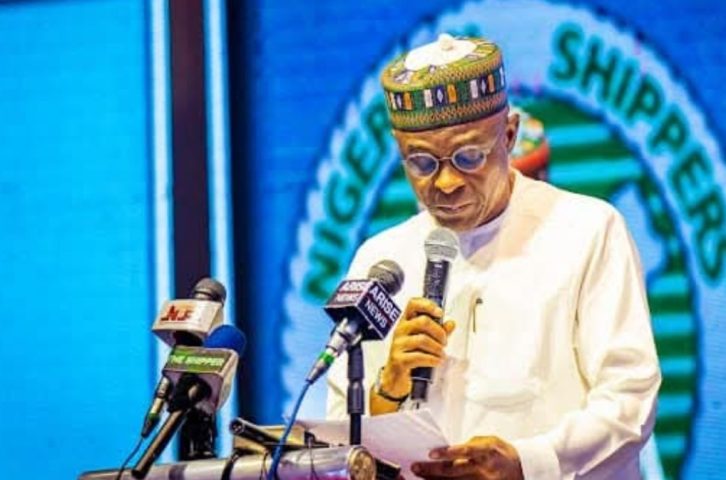
Secretary to the Government of the Federation (SGF), Senator George Akume, delivered this charge while opening the 18th International Maritime Seminar for Judges. Organized by the Nigerian Shippers’ Council (NSC), the high-profile summit gathers top jurists to align Nigeria’s maritime legal frameworks with the federal government’s Renewed Hope Agenda.
Senator George Akume emphasized that maritime justice is a critical national economic priority rather than a isolated sectoral issue. He warned that sluggish, unpredictable, or technically uninformed legal processes directly compromise the nation’s logistics network and market stability.

“No shipping line will regard Nigeria as a reliable port of call if they fear that legal processes will be slow, unpredictable or technically uninformed. This seminar addresses those concerns directly,” the SGF stated. “When a maritime claim is delayed in court, investor confidence falls. When commercial disputes go unresolved, the cost of imports, exports and essential goods rises. These are not merely legal abstractions; they are economic realities.”
The SGF lauded the Nigerian Shippers’ Council for sustaining the initiative since 1995, highlighting it as one of Africa’s premier judicial capacity-building platforms. He praised the strategic synergy between the Council, the National Judicial Institute, and the Nigerian Maritime Law Association for significantly sharpening the expertise of jurists handling complex maritime litigations.
Reaffirming the executive arm’s commitment to transforming the seminar’s deliberations into concrete structural policies, Akume promised full administrative backing for the summit’s final resolutions.
“We will actively support the follow-through of actionable recommendations that emerge from this seminar. Where resolutions call for legislative review, we will engage the appropriate channels within the National Assembly and the Federal Ministry of Justice. Where they require ratification of international conventions, we will ensure the relevant executive processes are pursued,” he affirmed.
To anchor these reforms, the SGF urged key maritime pillars—including the Nigerian Maritime Administration and Safety Agency (NIMASA), the Nigerian Ports Authority (NPA), the Nigeria Customs Service, and the Federal Ministry of Marine and Blue Economy—to deepen inter-agency collaboration. This unified front, he noted, is vital to delivering the predictable, efficient operating ecosystem required to position Nigeria as Africa’s leading maritime hub.
The Minister of Marine and Blue Economy, Dr Adegboyega Oyetola, asserted that judicial excellence is now a strategic economic asset critical to transforming Nigeria into Africa’s premier maritime hub. He insisted that the nation must aggressively domesticate its maritime justice system to halt the routine flight of shipping litigation to international tribunals.
“Nigeria cannot aspire to become Africa’s preferred maritime hub while complex shipping disputes continue to be routinely resolved in foreign jurisdictions through litigation or arbitration. The strengthening of our admiralty jurisprudence is therefore an essential pillar of our national economic strategy,” the minister said.
“A predictable, well-reasoned, and internationally informed judiciary is itself an instrument of economic competitiveness. It lowers transaction costs, enhances commercial confidence, encourages parties to choose Nigerian courts and Nigerian arbitration centres for the resolution of maritime disputes, and reinforces Nigeria’s reputation as a credible destination for maritime investment.”
While highlighting massive administrative milestones—including securing a £746 million UK financing agreement to modernize the Apapa and Tin Can Island ports, disbursing the Cabotage Vessel Financing Fund (CVFF), reclaiming Nigeria’s Category C seat on the IMO Council, and scaling agency revenues past ₦1.8 trillion in 2025—Oyetola noted that infrastructure alone is not enough. He added that the success of these multi-trillion-naira projects, alongside four consecutive piracy-free years achieved via the Deep Blue Project, hinges entirely on a trustworthy bench.
“Infrastructure, policy reforms, and institutional development alone cannot guarantee the success of our maritime aspirations. They must be complemented by a legal and judicial system that commands confidence both nationally and internationally,” he noted.
Closing his address, the Minister challenged jurists to actively evolve alongside the rapid digitalization and green transition reshaping global shipping. He identified autonomous surface ships, blockchain-backed cargo logs, electronic bills of lading, and global decarbonization mandates as the next major breeding grounds for complex litigation.
“The maritime legal landscape is undergoing profound transformation globally, and Nigeria must not be left behind. It is therefore imperative that our judicial officers continue to update their knowledge and remain abreast of emerging developments in maritime law,” he urged.
“We shall continue to support the expansion of specialised maritime divisions within the Federal High Court, staffed by appropriately trained judicial personnel. We will also encourage the development of robust alternative dispute resolution mechanisms, particularly maritime arbitration, to complement judicial processes while providing commercially efficient pathways for dispute settlement.”
Jointly organized by the Nigerian Shippers’ Council and the National Judicial Institute, the historic International Maritime Seminar brought together a high-profile assembly of jurists, arbitrators, maritime practitioners, and regulators from across West Africa. The summit serves as a premier sub-regional platform to tackle emerging legal frontiers and systematically strengthen judicial capacity throughout the maritime sector.
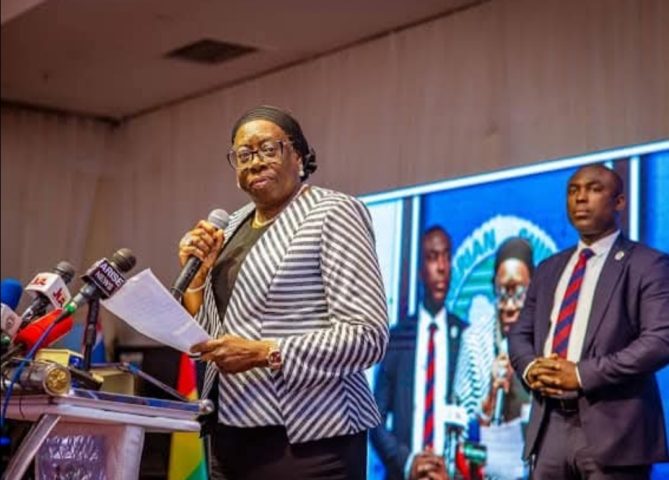
Officially declaring the seminar open, the Chief Justice of Nigeria, Justice Kudirat Kekere-Ekun, highlighted the maritime sector as a vital economic engine driving international trade, national revenue, and job creation.
However, the Chief Justice warned that the efficiency of this multi-trillion-naira ecosystem relies entirely on the speed and precision of the courts handling its inherently complex, cross-border disputes.

Justice Kekere-Ekun stressed that because maritime commerce is strictly time-sensitive, any judicial delays directly disrupt global shipping operations, escalate transaction costs, and choke off investor confidence. To safeguard the industry, she underscored the critical necessity of maintaining a highly responsive, swift, and specialized system of admiralty justice.
Turning to the globalized reality of modern shipping, the Chief Justice noted that because ships, cargoes, and contracts routinely cross multiple jurisdictions, isolated legal frameworks are no longer sufficient. She called for aggressive, cross-border collaboration among international courts, jurists, regulators, and legal practitioners to harmonize maritime dispute resolutions.
Closing her address, Justice Kekere-Ekun praised the International Maritime Seminar as Africa’s premier anchor for elite judicial engagement, knowledge-sharing, and long-term institutional capacity building.

In his vote of thanks, Dr Akutah Pius, Ukeyima, Esq. FCILT, MON, Executive Secretary and Chief Executive Officer of the Nigerian Shippers’ Council, expressed profound appreciation to the President of the Federal Republic of Nigeria, President Bola Ahmed Tinubu, GCFR.
He commended the President for unlocking economic diversification through the creation of the Federal Ministry of Marine and Blue Economy and for strategically resuscitating key ministries within the sector.
The NSC boss also extended his sincere gratitude to all participants for honoring the invitation and contributing to the event’s success with their presence.
The 18th International Seminar for Judges drew an elite assembly, featuring the Chief Justices of The Gambia, Ghana, Kenya, Liberia, and Sierra Leone. The prestigious event also gathered an esteemed cohort of Supreme and Appeal Court Justices, Federal and State High Court Judges, legal scholars, arbitrators, and maritime law practitioners.