Driving trade efficiency through its regulatory mandate, the Nigerian Shippers’ Council (NSC) has blocked over ₦86.06 billion in unjustified demurrage charges since November 2023. Through robust Alternative Dispute Resolution (ADR) and strategic market interventions, the Council also secured an additional ₦4.54 billion and $1.348 million in direct savings for local shippers.

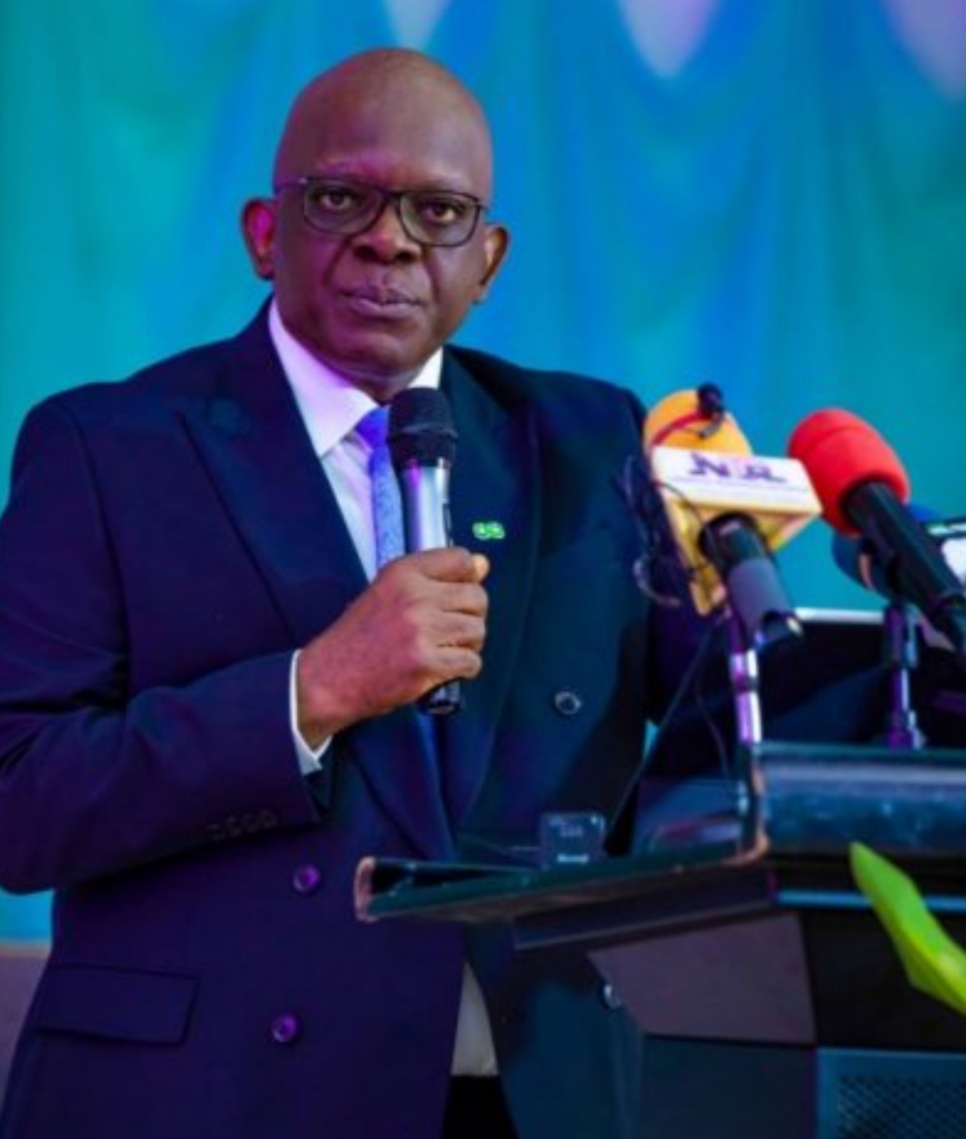
Revealing these milestones, the Executive Secretary and Chief Executive Officer of the NSC, Dr. Akutah Pius Ukeyima, Esq, MON, FCILT, presented his administration’s performance scorecard during a media luncheon with maritime journalists in Lagos on Saturday, July 4. He highlighted the historic recoveries as proof of the Council’s deepened regulatory efficiency.
Dr. Akutah emphasized that the strategic regulatory measures form a vital part of an ongoing overhaul to strengthen the Council’s oversight as the Nation’s Port Economic Regulator. This initiative directly supports the Federal Government’s Marine and Blue Economy goals by fostering a more competitive business environment. Under this framework, the NSC successfully insulated the economy from over ₦90.60 billion and $1.348 million in operational leaks, primarily by checking unjustified demurrage penalties imposed on Shippers’.
Breaking down the scorecard, Akutah stated that the Council received 558 complaints from port users between the fourth quarter of 2023 and the second quarter of 2026, successfully resolving 295 commercial disputes. The arbitrated matters involved container deposits, demurrage, detention fees, terminal charges, cargo claims, and export-related conflicts.
Notably, the Council successfully brokered out-of-court settlements with APM Terminals Nigeria Limited, CMA CGM, and Maersk Nigeria Limited regarding unapproved tariff charges. By mitigating protracted litigation, these interventions have heavily reinforced market confidence in the NSC’s Alternative Dispute Resolution Mechanism.
Parallel to its dispute resolution triumphs, the NSC recorded profound structural milestones, notably facilitating the legislative passage of the Nigerian Port Economic Regulatory Agency (NPERA) Bill. The legislation, which now awaits Presidential Assent, is poised to establish an autonomous port economic regulatory body equipped with enhanced powers over tariffs, market competition, and operational standards.
Furthermore, the Council achieved a historic fiscal turning point by securing its first-ever statutory funding allotment since its establishment in 1978, formalized via the 2025 Appropriation Act. Akutah described this development as an essential pillar for long-term regulatory sustainability.
In a targeted move to reduce the cost of doing business at Nigeria’s seaports, the NSC successfully streamlined bonded terminal invoice structures. By compressing 18 disparate tariff lines into six unified categories, the intervention effectively eradicates duplicate charges and elevates billing transparency across the maritime sector.
Furthermore, Akutah noted that the Council has intensified its technical alignment with the National Single Window (NSW) initiative while resolving long-standing issues hampering the International Cargo Tracking Note (ICTN) deployment. Both frameworks are strategically designed to enhance cargo visibility, simplify port clearance procedures, and lower trade transaction costs.
Addressing industrial relations, the CEO stated that the NSC successfully mediated a milestone Collective Bargaining Agreement (CBA) between the MWUN and shipping sector employers. This intervention officially establishes a ₦200,000 minimum wage standard for junior maritime staff, effectively concluding nearly two decades of labor negotiations.
Dismissing allegations of a secret employment drive, Akutah maintained that the Council’s recent recruitment was fully transparent and strictly adhered to federal due process. He revealed that the entire exercise was independently managed by the Federal Character Commission for complete fairness and credibility. He urged journalists to visit the Council for clarification.
To eliminate administrative red tape, Akutah highlighted the deployment of an Enterprise Content Management System to digitize and automate internal operations, alongside a new Leadership and Succession Planning Project to future-proof the agency’s institutional capacity.
Looking ahead, the NSC Chief Executive pledged to prioritize the full deployment of the National Single Window and ICTN, expand trade-facilitating infrastructure, and aggressively protect consumer rights. These strategic pillars will anchor the Council’s high-stakes transition into the newly minted Nigerian Port Economic Regulatory Agency (NPERA).
Looking forward, Dr. Akutah underscored the Council’s commitment to cultivating a world-class port economic regulatory ecosystem.
He emphasized that the framework is explicitly built to shield local shippers, unlock vital infrastructure investments, and crown Nigeria as West and Central Africa’s premier maritime hub.