

Driven by the escalating wave of banditry across Nigeria, BBC Hausa published a detailed report on Thursday, June 4, 2026, exploring this critical issue. Sooth News has translated and analysed the original Hausa broadcast into English for this exclusive feature. Below is the BBC report:
“Nigeria is grappling with security challenges across various regions, including the Boko Haram insurgency, lethal banditry, and kidnapping for ransom.
Recently, bandits abducted a former high-ranking Nigerian military officer. Local media reports indicated that his captors negotiated their demands strictly over the telephone.
However, a persistent point of confusion for the public is how these bandits can spend months communicating via phone with the relatives of victims to negotiate ransom payouts without being intercepted.
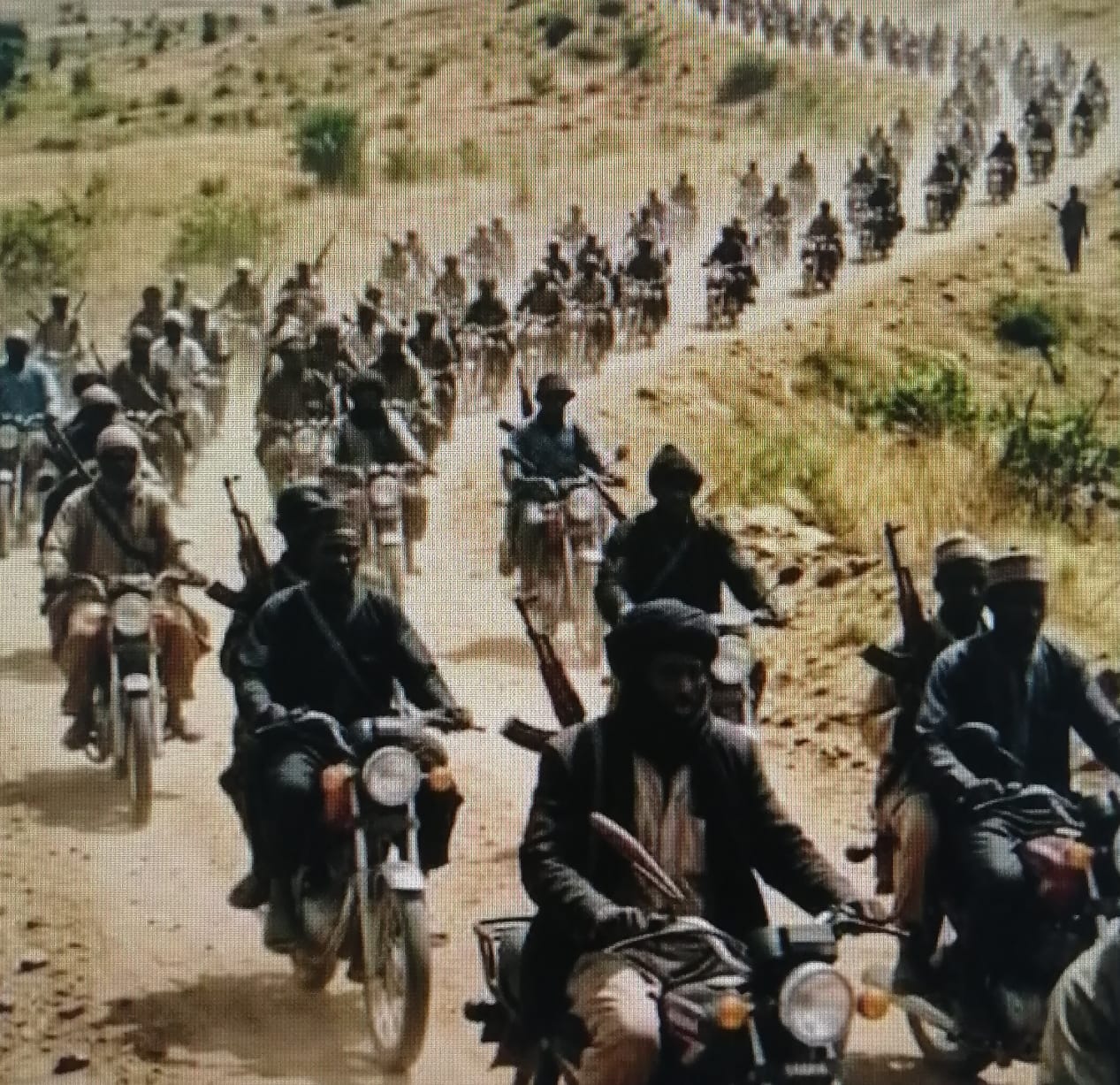
Furthermore, a trend that has rapidly escalated recently is how suspected bandits record videos of themselves in the forests and share them on social media platforms like TikTok, or even “go live on TikTok broadcasts” to defend their actions.
“There is no doubt that bandits are exploiting the internet to showcase their bravado and criminal activities,” said Sahel security expert and Managing Director of Beacon Consulting, Kabiru Adamu.
But why is it rare to hear news of the arrest of these bandits who speak directly with victims’ relatives or openly broadcast on TikTok?
Local media platforms have previously cited former Nigerian Chief of Army Staff, Tukur Buratai, as saying that “the country possesses the technical expertise required to track bandits.”
“In this modern era, the internet and social media platforms are tools for gathering open-source intelligence (OSINT), and every security agency should ideally be utilizing them,” the expert explained.
Adamu further noted that many international powers, including the United States and various European nations, have already institutionalized intelligence gathering through cyberspace.
However, he pointed out that in countries like Nigeria, there is a visible reluctance among counter-terrorism and security agencies to fully deploy these methods, even though the rest of the world has embraced them.
While he noted that Nigeria has recently begun taking steps to adopt this approach, “they have not fully integrated or operationalized it into their systems effectively.”
He elaborated that, for example, “there is a severe lack of data regarding whether this intelligence framework has ever been successfully used to apprehend criminals. Conversely, there is ample evidence showing that internet data has been swiftly deployed to arrest citizens who voice opinions opposing the authorities.”
Is the Government Monitoring Citizens’ Communication?
The critical foundation—or the primary phase—of leveraging this framework to apprehend criminals via telecommunications technology is data interception and gathering.
Kabiru Adamu stated, “there is no question that the government possesses surveillance and tracking hardware across its various agencies.”
“By combining technological intelligence gathering, digital mapping, and certain specialized strategies—which I prefer not to disclose for national security reasons—it is entirely possible to pinpoint the exact location of anyone using a communication platform,” the expert revealed.
Why Are Forest Bandits Rarely Apprehended via Phone Tracking?
The Communications Ministry: “I believe the primary obstacle hindering the utilization of this framework is the lack of seamless, deep integration of the Ministry of Communications, Innovation and Digital Economy into core national security operations,” Adamu stated.
The expert emphasized that Nigeria must formally embed the ministry’s specialized capabilities directly into the nation’s counter-terrorism architecture. The government ministry is tasked with developing, modernizing, and overseeing the telecommunications sector nationwide.
Logistical Deficits: He highlighted that tactical hardware is urgently needed to grant security forces rapid-response capabilities, enabling them to storm a criminal’s location the moment a digital trace is established.
Lack of Digital Infrastructure Ownership: The security expert noted that sovereign states do not exercise direct command or operational control over global social media and internet conglomerates. He noted that this forms the core of the ongoing global debate surrounding digital accountability.
He observed that this vulnerability is not unique to Nigeria, as most African nations lack the geopolitical leverage required to regulate or influence the algorithms and policies of major social media networks.
While Nigeria previously attempted to address this vulnerability by enforcing regulatory crackdowns on Twitter (now X) regarding its operational conduct within the country, Adamu noted that the initiative did not yield a comprehensive success.
Misplaced Government Priorities: “From our assessment, politicians prioritize tracking down youths who insult or criticize them online, deploying these high-tech tracking methods swiftly to arrest them. Yet, we do not see a corresponding level of urgency or effort when it comes to tackling actual national security threats,” Adamu concluded.’’