
Championing stability across the maritime value chain, the Nigerian Shippers’ Council (NSC) met with critical stakeholders on Tuesday to navigate the complexities of proposed tariff reviews. The Council has now officially institutionalized a ‘consultation-first’ policy, making comprehensive stakeholder engagement a non-negotiable prerequisite for any new pricing regime.
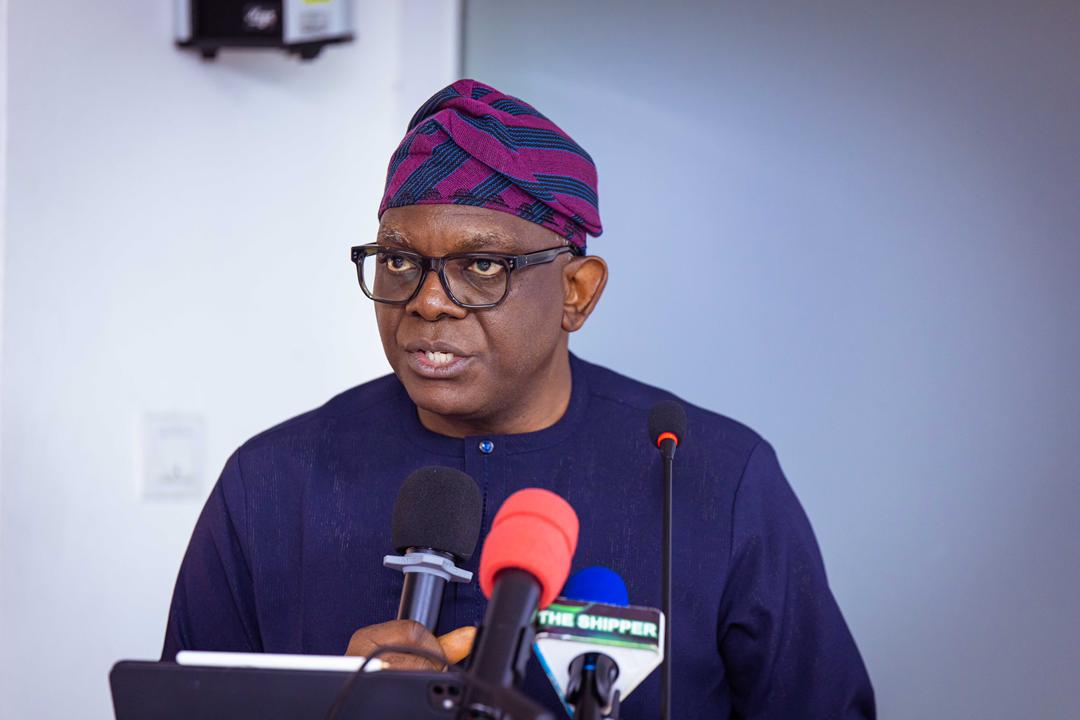
At the recent maritime forum, NSC Boss Akutah Pius Ukeyima, Esq, MON, FCILT, Ph.D clarified that the March 2026 tariff suspension was far from accidental; it was a calculated step to allow for inclusive industry dialogue. By pausing implementation, the Council successfully opened the floor for critical consultations designed to protect the interests of every player in the maritime value chain.
Reinforcing the Council’s regulatory stance, Dr. Akutah stressed that the commencement of any new tariff regime is strictly conditional. Shipping companies are now directed to finalize their consultations with critical stakeholders—including shippers and freight forwarders—to ensure that the proposed changes do not disrupt the national economy.

Dr. Akutah reassured stakeholders that the approved 30% tariff increase is designed to support, not destabilise, the economy. He clarified that this figure represents an “upper limit” rather than a fixed rate, allowing for flexibility where companies may implement lower adjustments—such as 10% or 20%—based on their specific stakeholder consultations.
“Today’s engagement was productive. The suspension of the tariff implementation last month created room for us to interact with stakeholders and address key concerns.
” The 30% increase is the upper limit; shipping companies may implement 10 or 20% depending on the outcome of their consultations. It will be gradual,” he said.
Dr. Akutah emphasized that the adjustment is designed to avoid economic shocks, noting that several shipping companies have already initiated the consultation process and begun a phased implementation of the new rates.
Addressing past frictions, the NSC boss disclosed that the actions of a single operator had previously fuelled industry tensions.
However, he emphasized the Council’s role as a fair regulator: despite shipping lines proposing drastic hikes of up to 200%, the NSC negotiated a modest 30% ceiling to safeguard the economy while ensuring operational sustainability for service providers.
“Shipping companies argued that 30% is too low given inflation and rising operational costs, but we determined it was sufficient to avoid overburdening the economy,” he said.

The NSC boss affirmed that the new rates reflect today’s economic climate, including the rising cost of Labor within the maritime sector. He was clear: the goal is not to drive up profits, but to keep the industry afloat in a way that remains fair and manageable for the wider public.
“We need shipping companies to operate efficiently, but we can not allow increases that could strain the entire system. The goal is to maintain balance,” he added.
Maritime stakeholders at the forum underscored the critical necessity of consultation before any tariff adjustments take effect. While industry players acknowledged that current economic pressures make an increase inevitable, they sharply criticized the initial lack of prior engagement and transparent dialogue.
Addressing the recent 30% tariff ceiling, NSAN President, Dr. Jamilu Goma affirmed that stakeholders recognize the need for cost recovery but will not accept arbitrary implementation. He underscored that rigorous stakeholder dialogue is a non-negotiable prerequisite for industry harmony and economic stability.
“We are not against the increase, but due process must be followed. There must be proper consultation, and all stakeholders must be carried along,” he said.
Supporting the industry-wide outcry, MAN insisted that shipping lines must be legally mandated to engage stakeholders before reviewing tariffs. The association maintained that securing consensus is the only way to ensure the impending 30% tariff ceiling doesn’t place an unfair burden on Nigerian manufacturers.
“Survival, Not Profiteering”: Boma Alabi, SAN, Chairperson of the Shipping Association of Nigeria, underscored that the recent tariff hike is a vital cushion against escalating maritime costs. She revealed that the 30% cap mandated by the NSC is actually far below industry expectations, but affirmed the association’s commitment to sustained collaboration and dialogue across the value chain.
“The 30% approved is not entirely commercial. We initially proposed over 100%, but this reflects current realities. Shipping companies are also contending with rising costs, including a minimum wage of N200,000 in the subsector,” she said.
”Competitive & Collaborative”: Alabi urged stakeholders to move beyond dialogue and toward a unified partnership, aimed at transforming Nigeria’s maritime industry into a value-driven powerhouse.
Key maritime and trade associations were out in full force, including ANLCA, NAGAFF, AREFFN, and the Manufacturers Association of Nigeria (MAN). The consultation also drew expertise from NCMDLCA, APFFLON, the West Africa Exporters Association, and Ndigbo Amaka, ensuring every segment of the industry was represented.