
By Bashir Hassan Abubakar
The convoy rolled into Bauchi under a pale Northern sky, but this was no routine diplomatic visit. For four days, meeting rooms, palace courtyards, dusty community squares and innovation hubs across the State became stages for a deeper conversation about development — what works, what endures, and what it truly takes to change lives.

A powerful delegation from Global Affairs Canada (GAC) and UNICEF Nigeria came visiting. On paper, it was a monitoring visit. In practice, it was something more layered: a test of partnerships, a validation of investments, and a glimpse into Bauchi’s evolving development story.
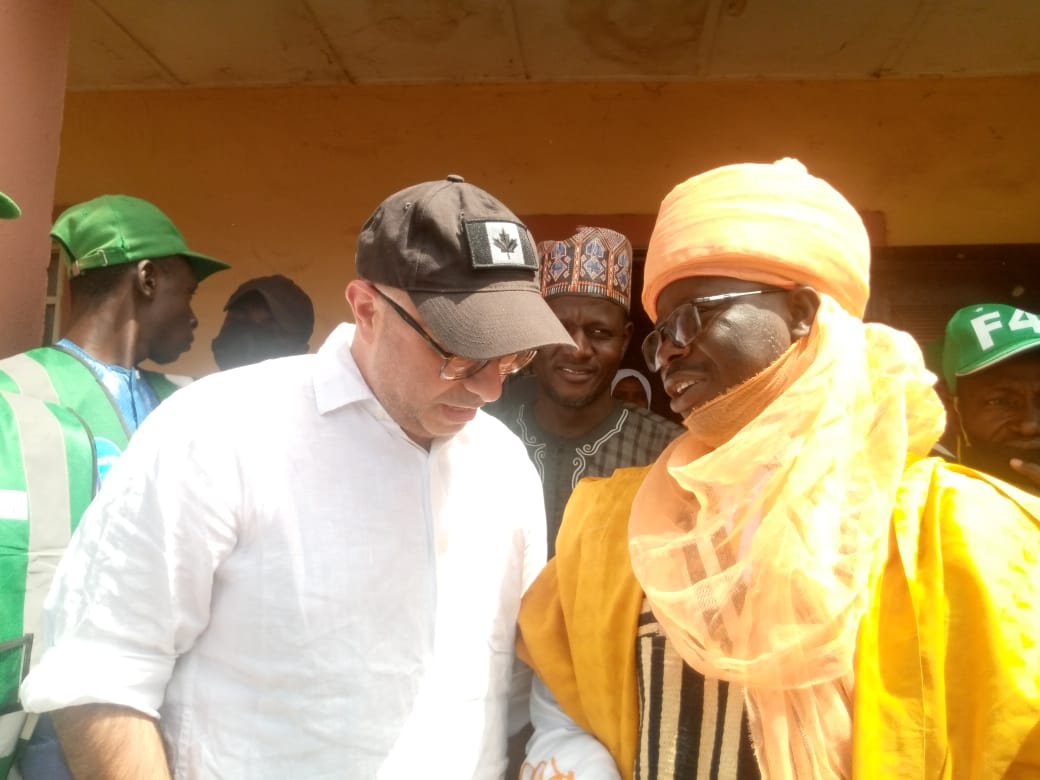
At the center of the delegation was Mr. Arash Irantalab Tehrani, Head of Development Cooperation at the High Commission of Canada in Nigeria, accompanied by UNICEF Nigeria’s Deputy Country Representative, Mrs. Rownak Khan. Their schedule was tight. Their mandate was clear — assess impact, listen closely, and strengthen collaboration. But to understand the significance of the visit, one must look beyond the itinerary.

The first stop for the visiting team was not a rural village or health facility. It was the conference rooms of the government — where policies are shaped and budgets decided. Commissioners from health, education, and humanitarian sectors gathered to welcome the delegation. They spoke of maternal mortality rates, school enrollment figures, immunization coverage, adolescent empowerment, and gender-based violence mitigation. They referenced village savings groups, menstrual hygiene management, water and sanitation initiatives.
Behind the technical language was a central message: Bauchi State, under Governor Bala Mohammed, has made development partnership a strategic priority.

For donors, political will matters as much as funding. A programme cannot outlive a government’s commitment to it. The commissioners were keen to emphasize that external interventions are not operating in isolation; they are embedded within state systems. It was a necessary starting point — because sustainable change begins at policy level.
Where Policy Meets Dust Roads
If the conference rooms provided assurances, the communities would provide evidence.The delegation travelled to Dass and Darazo Local Government Areas of Bauchi State, where the real test of development lies — not in strategy documents, but in behaviour change.

In Dass, the visit began at the palace of the Emir, His Royal Highness Alhaji Usman Bilyaminu Othman. The symbolism was unmistakable. In Northern Nigeria, traditional rulers remain powerful custodians of social norms. No development intervention can thrive without their endorsement.
From the palace, the GAC and partners delegation moved to Bundot community. There, adolescent girls sat in a semi-circle, speaking with a confidence that belied their rural setting. Supported by Plan International under GAC funding, these young advocates are trained to challenge gender-based violence and promote sexual and reproductive health rights.
A few years ago, conversations about reproductive health in such spaces might have been whispered — if held at all. Now, teenage girls articulate them publicly.
The Women of Mama2Mama

In Dot community of the same Dass LGA, another story unfolded. Under a tree shaded gathering space, members of the “Mama2Mama” group demonstrated how they carry out awareness campaigns and promotion of access to maternal and child care at healthcare facilities. These women-led community resource groups advocate for antenatal care attendance, immunization uptake, facility deliveries, hygiene practices and gender-based violence prevention.
The GAC team also interfaced with yet another adolescents boys and girls groups that were trained by UNICEF Nigeria Bauchi Field Office (BFO) on how produce reusable sanitary pads — stitched carefully, layered with absorbent fabric, designed to be both affordable and dignified.
Supported technically by UNICEF and funded by GAC, these community resource group’s activities extends beyond awareness campaigns.
The skills they have acquired generate income. The income strengthens their bargaining power within households.
The strengthened voices influence community norms.
One member of the Adolescent group explained that the pads not only improve menstrual hygiene management but also create economic opportunity. It is a reminder that development interventions are most effective when they address multiple vulnerabilities at once — health, income, dignity.

The Mama2Mama and Adolescent SRHR group model reflects a shift in global development thinking. Beneficiaries are no longer passive recipients; they are actors and entrepreneurs within their own communities.
Fathers Rewriting the Script
In Konkyel community of Darazo LGA, the narrative shifted again. Here, the delegation met members of the “Fathers4Health” initiative — male caregivers championing maternal and child health.
In many rural communities, men control financial resources and make key household decisions. Convincing a mother to attend antenatal care is not enough if her husband withholds permission or transport fare.
Fathers4Health addresses this reality directly. Established by the Bauchi State Primary Health Care Development Board in collaboration with UNICEF and supported by GAC, the initiative encourages men to become advocates for immunization, hygiene and healthcare access.
During the interaction, some fathers described how they now accompany their wives to health facilities — a subtle but powerful departure from tradition.

Beyond Health: The Economics of Resilience
The itinerary also included a stop at a technology incubation centre in Bauchi metropolis.
Inside, the air carried the scent of processed grains and roasted peanuts. Women and youth entrepreneurs showcased products from rice, peanut and soybean value chains — part of an intervention implemented with MEDA and funded by GAC.
Agriculture remains Bauchi’s economic backbone. Improving processing capacity and market access strengthens not just incomes but food security. Nutrition, after all, is not solely a health sector issue. It is deeply tied to livelihoods.
By investing in agribusiness and supporting small-scale enterprises, the programme addresses structural poverty drivers. It recognizes that resilient households are healthier households.
The Announcement
The final act of the visit unfolded at the Government House. In formal remarks, Mr. Arash Irantalab Tehrani reaffirmed Canada’s commitment to inclusive development, gender equality and climate resilience. Then came the announcement: six new projects for Nigeria totaling $64 million — four directly targeting Bauchi State.
The allocation spoke volumes. For a donor to expand investment in a state signals trust — in governance systems, in accountability mechanisms, and in the likelihood of impact.

Deputy Governor Mohammed Auwal Jatau, representing Governor Bala Mohammed, responded with assurances of continued partnership and fiscal commitment, reiterating Bauchi’s long standing resolve to allocating at least 15 percent of the state budget to health in line with the Abuja Declaration. Donor funding can catalyze progress. But domestic financing sustains it.
Development as Relationship
What distinguished this visit was not the scale of funding announced or the number of communities toured. It was the layered nature of engagement.
The delegation moved seamlessly from policy conversations to palace courtyards, from adolescent circles to incubation hubs. They listened as much as they spoke.
Development, at its best, is relational. It is built on trust between governments and donors, between institutions and communities, between women and men, between young advocates and traditional authorities. Bauchi’s experience reflects this interplay.
Challenges remain — maternal mortality rates, poverty levels, climate vulnerability, educational access. No four-day visit can resolve these complexities. But it can reinforce alignment. It can signal that international investment is tied to local ownership. It can remind stakeholders that sustainability is not an afterthought — it is the goal.
After the Convoy
When the vehicles eventually departed Bauchi, they left behind more than press statements.They left renewed commitments.They left community groups emboldened by recognition.They left policymakers aware that accountability travels both ways.
And perhaps most importantly, they left a subtle affirmation: that development, when anchored in partnership and driven by community ownership, can outlast funding cycles.
For Bauchi State, the visit was not merely about monitoring investments.
It was about demonstrating that transformation is possible when global commitment meets local resolve — and when four days of engagement are backed by years of sustained collaboration.