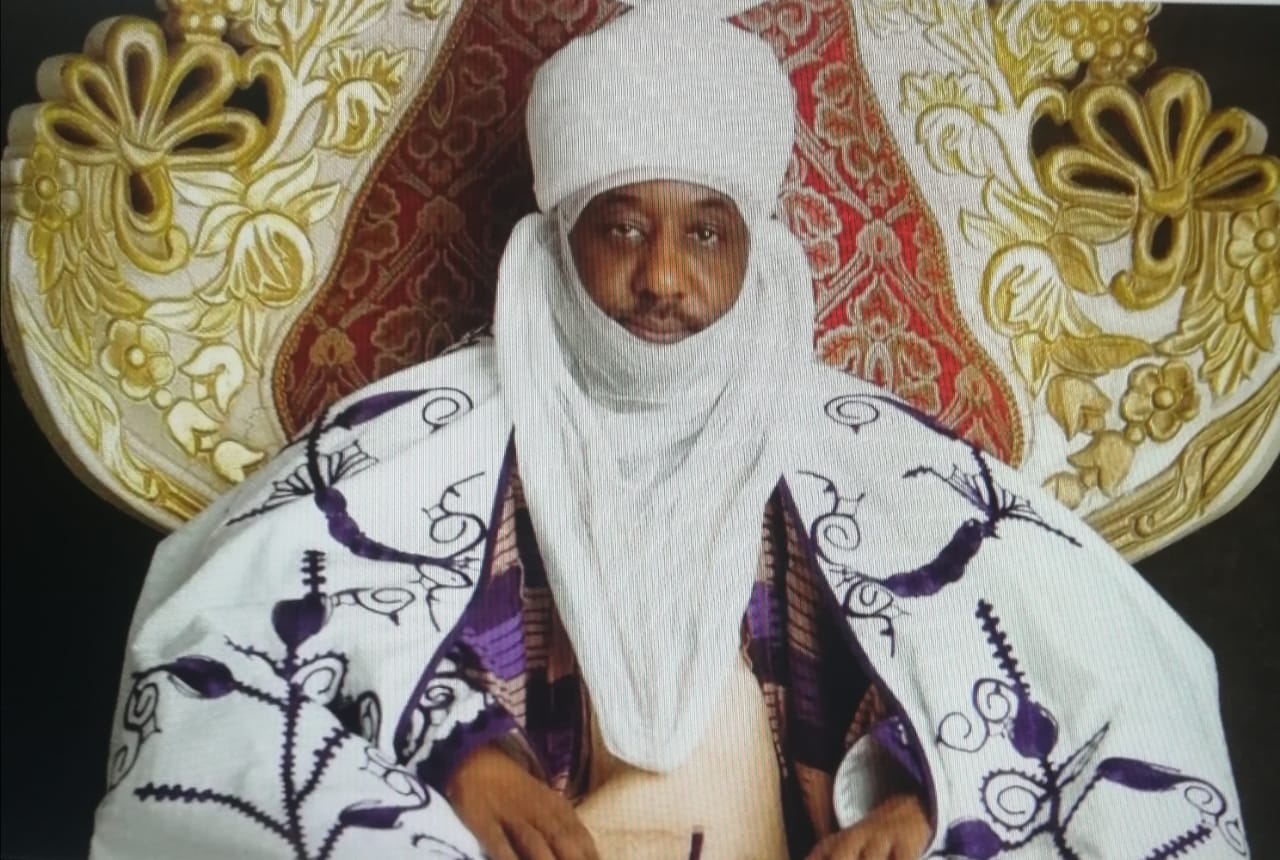
In a remarkable blend of traditional authority and academic humility, the 16th Emir of Kano, Muhammadu Sanusi II, has officially resumed his studies as a law undergraduate at Northwest University, Kano Nigeria.
Following his Thursday lectures, the monarch revealed that pursuing a Law degree has been a lifelong dream and a necessary tool for building a more equitable society. Already an accomplished scholar with a Ph.D in Sharia and a background in Economics from ABU Zaria, Sanusi’s return to the classroom as a 200-level student serves as a powerful testament to the value of lifelong education.
“I have always said that the classroom is my default. I am happiest when I am studying or teaching. For me, this is a great opportunity to do a subject I have always wanted to do. Law is all around us; it governs our families, our contracts, our property, succession, and even how we drive on the road. It is the safeguard for a decent and stable society,” he said.
Addressing rumours head-on, the Emir insisted his law degree is about ‘personal passion, not past cases,’ stressing that his motivation is strictly academic and intellectual.
“It helps a lot to understand the law, but beyond that, it is a field that holds society together. The day you don’t have law and order, the strong do what they can and the weak suffer what they must,” he said.
Regarding his choice of Northwest University, the Emir noted that the institution provided the admission and, as a state-owned entity, deserved his patronage and support as a local stakeholder.
“We tend to underestimate our own teachers, but they attained the same levels of education as those abroad. If you study law, you might as well study law in Nigeria. What is the point of studying British law when you are not going to live there?” he asked.
On balancing his traditional responsibilities with concurrent academic commitments, the Emir credited the university’s flexible learning model. He noted that while mid-week is focused on his legal studies, his administrative duties at the palace remain a priority during the traditional ‘sitting hours’ on Mondays and Fridays.
“I am a student in the morning and an Emir in the afternoon. Tuesdays, Wednesdays and Thursdays are for classes, while Mondays and Fridays I sit at normal hours.
“When I cannot attend physically, I join virtually. The university has been flexible enough to accommodate my schedule,” he said.
Reflecting on his classroom experience, Sanusi said he was impressed by the discipline and seriousness of the students.
“I sat on wooden benches in the 1970s. Today, the seats are more comfortable, and I see young men and women determined to study. Law has always been a conservative discipline, and I have enjoyed sitting with them,” he said.
Emir Sanusi II challenged Nigerians, regardless of age, to embrace the philosophy of lifelong learning, asserting that the pursuit of knowledge should never be considered a finished task
“Nobody is too young or too old to go to school. The more education you have, the better a citizen you become. I have been here for just three days and I have learnt a lot. We should all seek knowledge because that is what improves us as individuals and as citizens,” he said.
Emir Sanusi used the platform to advocate for essential educational infrastructure investment. He stressed that without improved IT, reliable power, and better staff welfare, Nigeria cannot produce globally competitive graduates or foster a true knowledge-based economy.
“Our human capital is our greatest resource. Producing high-quality lawyers and professionals who will shape the future of our institutions is extremely important. For me, this is a personal quest, but also a message to society that education must be a priority,” he said.