
Tehran’s Supreme National Security Council has declared that the strategic Strait of Hormuz will remain blocked until the United States “corrects its behaviour,” introducing aggressive new terms that threaten to derail ongoing maritime traffic negotiations.
State television broadcast the ultimatum from council secretary Mohammad Bagher Zolghadr, a prominent commander within the Islamic Revolutionary Guard Corps (IRGC).
The official decree states Washington must cease all hostilities, stipulating that the US must never threaten Iran again while permanently ending military actions against Tehran and its regional proxy network.
Demands dictate that the US military must dismantle its naval blockade of Iranian ports and completely withdraw its forces from the Persian Gulf.
Meanwhile, to resolve the closure, Washington must “completely compensate” Iran for conflict-related damages, eliminate existing economic sanctions, and “unconditionally” release all frozen state assets.
The White House has not yet issued a formal response. US diplomats have consistently maintained that a verified transit treaty for the strait must be finalized before any port blockades are lifted.

Under the existing interim deal, establishing a timeline to lift sanctions and execute a compensation strategy remains a core condition of the final text, while active talks continue to address frozen assets.
Negotiators face a critical bottleneck as the 60-day window to lock in a final agreement expires in just over a week, though global diplomats may choose to extend the timeline.
Independent of Washington, Tehran claims it is on the verge of finalizing a separate bilateral management strategy for the shared waterway with neighbouring Oman.
Iranian Foreign Minister Abbas Araghchi confirmed that negotiators are nearing a consensus on maritime navigation, “specifically the determination of a transit route”
Speaking via social media, Araghchi tempered expectations, warning that a complete reopening of the chokepoint remains strictly contingent on outside conditions being met.
The regional crisis escalated sharply after an oil and gas tanker owned by Abu Dhabi’s state-backed energy giant, ADNOC, was targeted while transiting the strait.
United Arab Emirates (UAE) Foreign Ministry explicitly accused Iran of firing the missile, characterizing the incident as part of a broader, systemic campaign targeting commercial shipping lanes.
While ADNOC verified that its crew escaped without casualties from this specific dawn strike, the broader conflict has taken a severe toll on the fleet.
“Over a dozen of its vessels have been attacked by missiles and drones while passing through the strait since the US and Israel launched the war on Iran in February,” the company disclosed, noting that the broader campaign has left one crew member dead and 20 others wounded.
ADNOC refrained from providing specific geographic coordinates or detailing the structural damage sustained by the vessel.
Shortly after, the United Kingdom Maritime Trade Operations (UKMTO) center reported that a vessel east of Khasab, Oman, was struck by an airborne projectile.
The strike sparked an onboard fire, which the crew successfully extinguished; both the ship and its personnel were subsequently declared safe.
Intelligence analysts have not yet verified if this UKMTO-tracked incident is the exact same strike reported by ADNOC.
Concurrently, Iran and Oman continue to negotiate a bilateral management framework for the waterway, which was universally classified as an international passage before the outbreak of the war.
The sudden maritime strikes materialized directly in response to the Houthis’ recent military offensives into central and eastern Yemen.
Colonel Majed al-Nazili, spokesperson for the Yemeni military, confirmed that defensive operations successfully targeted the rebels’ “sites and capabilities” across multiple front lines, opting not to elaborate further.
This rapid escalation between Houthi rebels and Yemen’s internationally recognized government—backed by a Saudi-supported coalition—now threatens to plunge the nation back into full-scale civil war.
Sounding the alarm on Friday, United Nations Envoy Hans Grundberg urged all factions to exercise immediate restraint, warning that: “Yemen today faces a greater risk of renewed large-scale conflict than at any point since the UN-brokered truce of April 2022”.
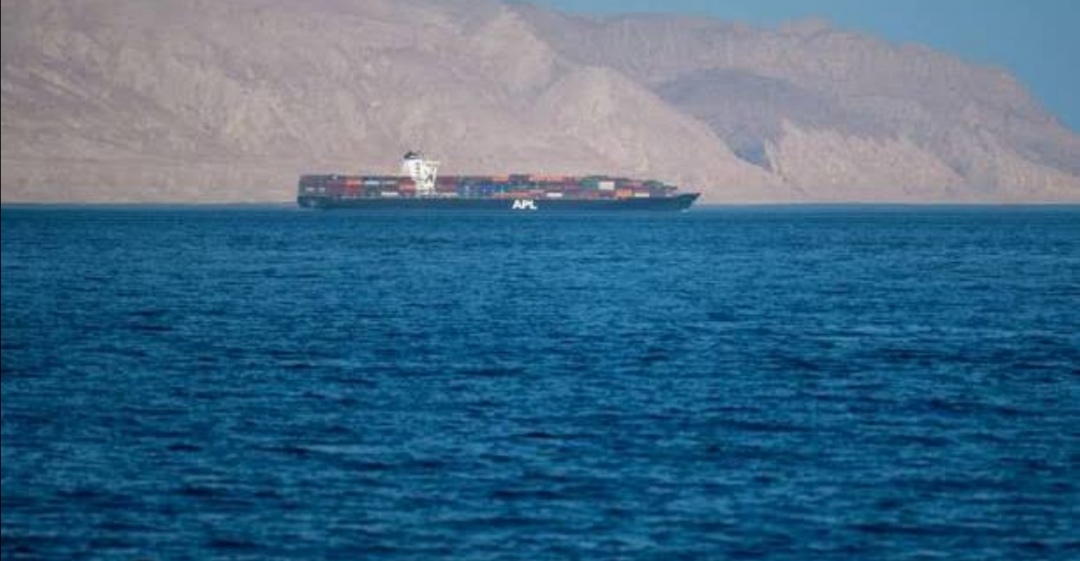
Editor’s Note: Representative image.