

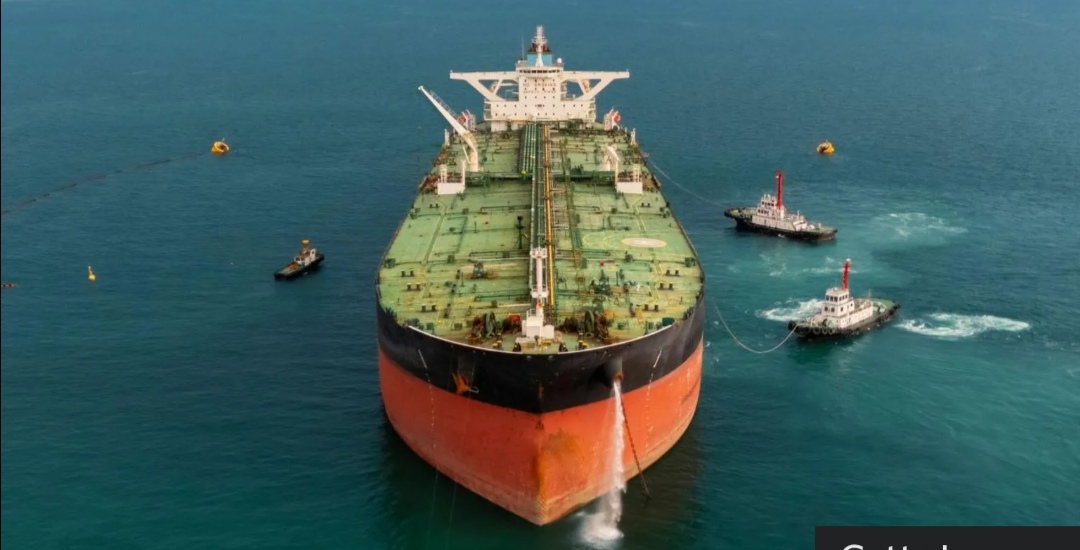
Geopolitical analysts warn that maritime risks for Middle East oil tankers have escalated to heights unseen since the outbreak of the Iran War, following a barrage of attacks targeting an alternative regional trade corridor.
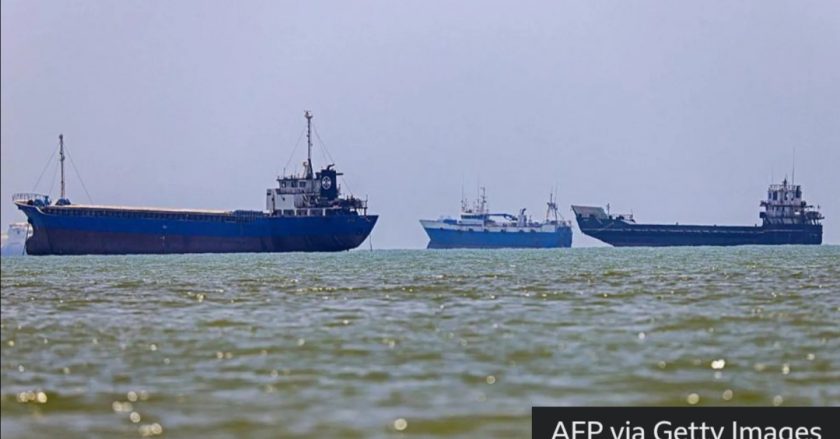
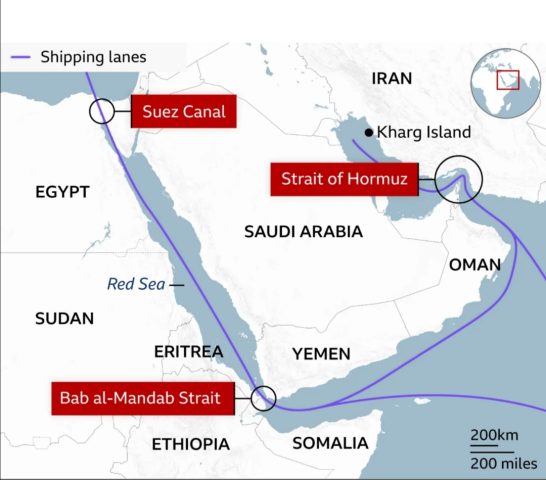
The security crisis intensified after a series of hostile strikes disrupted vessels navigating the Red Sea. Tankers had increasingly relied on this alternative waterway after Iran choked off transit through the strategic Strait of Hormuz.
Meanwhile, Tehran has flatly rejected claims by Donald Trump regarding active bilateral negotiations over the maritime blockage. While dismissing assertions that it was in direct talks with Washington to reopen the vital corridor, Iranian officials confirmed they are engaged in independent diplomatic discussions with Oman to stabilize the shipping lane.
“In terms of threat to the trade of crude, we’re at the worst period that we’ve been in since this crisis began,” warned Matthew Wright, an analyst at ship-tracking firm Kpler.
Data from Kpler highlights the scale of the collapse: just eight ships navigated the Strait of Hormuz on Sunday, following 11 on Saturday. By comparison, more than 100 vessels transited the chokepoint daily before the war erupted. Historically, roughly 20% of global oil and gas supplies relied on this single maritime corridor.
A short-lived, bilateral peace agreement negotiated with the United States in early June briefly revived traffic. However, a fierce resumption of military strikes between the two nations roughly one month later effectively choked off the corridor.
To evade detection, numerous crews have resorted to “going dark” by disabling their transponders mid-transit. Throughout the majority of the conflict, alternative routes have also faced immense pressure; Saudi Arabian oil exports that previously bypassed the strait were forced to reroute through a highly volatile Red Sea shipping lane separating the kingdom from West Africa.
An escalating series of attacks by Yemen’s Houthi rebels targeting Saudi oil tankers has compounded maritime risks across the Middle East, crippling this primary alternative
shipping corridor.
The Iranian-backed Houthi militia declared a blockade on Saudi Arabia’s Red Sea ports on July 20. Since then, the UK Maritime Trade Operations (UKMTO) agency has tracked an influx of hostile maritime engagements.
“Not only is the ongoing situation in the Strait of Hormuz constraining oil flows, but now a big factor that was helping to balance the market is now also under threat. It’s a problem stacked on top of a problem,” Wright said.
Tim Wilkins, managing director of Intertanko—the prominent trade association representing independent tanker owners concurred that the maritime industry is “facing a broadening, deteriorating, and increasingly complex security situation.”
Wilkins further observed: “We now have the high-risk area going up to Saudi Arabian waters and extending into parts of the Red Sea. So that’s having another impact on the market, on freedom of navigation as well.”
Data from Kpler shows that out of 28 commodity vessels passing through the Bab el-Mandeb strait on Saturday, six actively disabled their transponders to evade tracking.
While the targeted nature of the Houthi threat against Saudi shipping has left total traffic hovering at roughly 50% of historical pre-attack levels, regional supply lines are choking. The volume of ships loading crude oil for Asian export has plummeted to just four per day—marking the lowest baseline since the conflict erupted.
Global logistics firms are walking a tightrope. A spokesperson for shipping giant Hapag-Lloyd noted that while some of its fleet continues to brave the Red Sea, the company will “monitor developments closely and will adjust the network if circumstances change.”
The structural reality of supply chain disruption runs deep. The spokesperson cautioned:
“If the Strait of Hormuz reopened, most ships could probably leave the region fairly quickly. However, restoring normal cargo flows would take much longer.”
“Services have been suspended and ships redeployed elsewhere, so a return to normal flows would most likely take three to four months.,”
Despite quiet mediation channels brokered by Oman, Tehran insists no immediate breakthrough is on the horizon. Iranian Foreign Ministry spokesman Esmaeil Baqaei asserted that any forthcoming agreement would not lift active transit blockades while US “aggression” persisted.
Kpler’s Wright noted that while the Omani dialogue holds promise, sustainable stabilization demands direct American involvement. Without mutual concessions, current talks risk becoming a “false start.”
Nonetheless, energy markets reacted with sharp volatility. Crude prices tumbled after Donald Trump indicated he would freeze projected military strikes on Iran to prioritize high-level negotiations. Global benchmark Brent crude fell 4.4% to settle at $84.05 a barrel, recovering slightly after an earlier intraday plunge of 7.3% to $81.55.
Peter Sand, chief analyst at ship-tracking intelligence platform Xeneta, concluded that the escalating hostilities have effectively sent global commerce “back to square one.”The global shipping sector remains in “a terrible state, regardless of which shipping type you’re looking at.”
Sand warned that the outlook remains bleak: “The alternatives for getting cargo, whether that’s hydrocarbons or container shipping, are really not great, it is really still troubling times with no clarity and no change of fortunes within sight.”