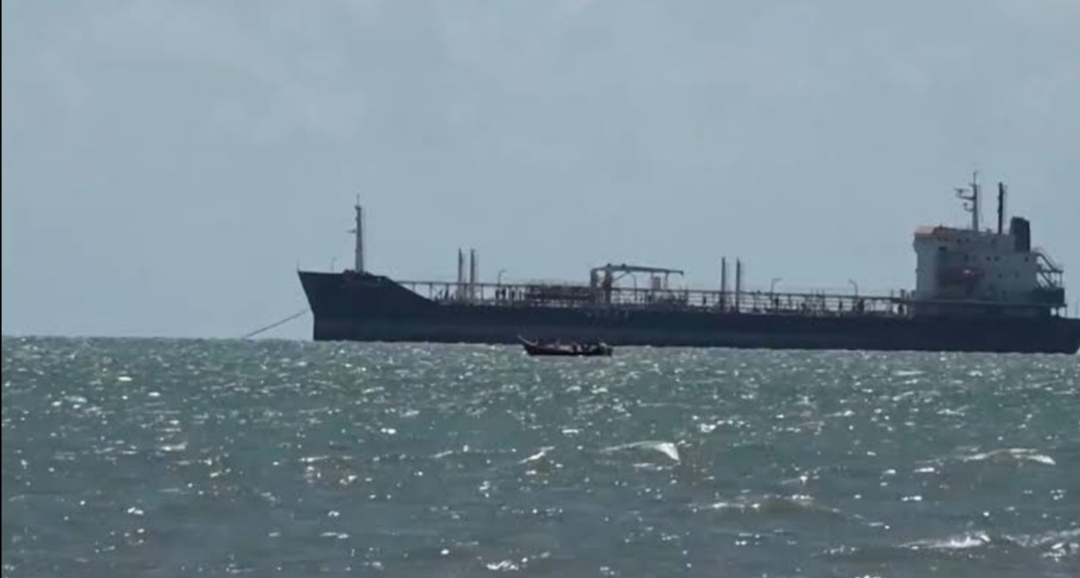
India has placed its maritime surveillance on high alert, closely monitoring six domestic vessels and tracking the safety of 166 Indian seafarers navigating the volatile Persian Gulf and Strait of Hormuz.
The emergency watch comes amid mounting regional tensions following the Houthi blockade of Saudi shipping lanes. Providing a breakdown of the personnel at risk, Ministry of External Affairs (MEA) spokesperson Randhir Jaiswal confirmed that six Indian-flagged ships are currently operating west of the strategic bottleneck, carrying a crew of 125 citizens. An additional 41 Indian national seafarers are deployed on foreign-flagged vessels within the high-risk zone.
To safeguard these vital maritime assets, New Delhi has launched a multi-agency security operation. The Ministry of Ports, Shipping and Waterways (MoPSW) is actively coordinating with relevant authorities to monitor the vessels and ensure the safety and welfare of Indian seafarers in the region, Jaiswal said.
This heightened vigilance comes as commercial shipping faces severe security threats from the ongoing geopolitical conflict. The Strait of Hormuz—the world’s most critical maritime choke point—remains an indispensable artery for international trade and global energy supplies, making its stability paramount.
The maritime crisis is not isolated to the Middle East, however. Expanding on India’s global security anxieties, Jaiswal also addressed concerns over Indian seafarers working in or travelling through the Black Sea region, where commercial vessels have recently come under attack.
Emphasizing New Delhi’s vast global footprint on the high seas, Jaiswal noted that India boasts one of the world’s largest seafaring communities, with tens of thousands of Indian nationals manning both domestic and foreign-flagged fleets. However, when pressed on the parallel danger zone in Eastern Europe, he admitted he did not have the exact number of Indian seafarers currently operating on ships in and around the war-torn Black Sea.
“We have the second-largest seafaring community. A lot of them are on Indian vessels, and a lot are also on foreign vessels. As to the exact number of Indian seafarers serving on ships in and around the Black Sea, I don’t have the figure with me right now,” he said.
In light of these dual threats, India issued a stern, unequivocal directive to the international community, reiterating that commercial shipping, civilian crews, and vital trade infrastructure must never become casualties of war.
“We have been very clear in articulating to both our partners and friends and to others also that under no circumstances can commercial shipping or the seafarers or civilians or civilian infrastructure be attacked and it must be avoided,” Jaiswal concluded.
In a sharp diplomatic escalation, New Delhi has vehemently condemned recent military strikes targeting commercial vessels in the Black Sea region. The Ministry of External Affairs (MEA) took decisive action on Monday, summoning Ukraine’s Ambassador to India, Oleksandr Polishchuk. The formal protest followed a fatal assault on the cargo ship MV OMORFI, which tragically resulted in the death of an Indian seafarer.
This deadly encounter underscores a rapidly worsening crisis for civilian crews trapped in the conflict zone. Just days earlier, the Indian Embassy in Ukraine reported that the merchant vessel MV AGN Ragnar, carrying four Indian nationals, was struck during a bombardement at the strategic port of Odesa. While two crew members were successfully rescued and reported safe, information regarding the fate of the remaining two remains eagerly awaited as search operations continue.
Editor’s Note: Representative image.