
In a sharp and historic escalation of the Middle East conflict, joint forces from Saudi Arabia and the United States executed a series of precision airstrikes targeting Iran-backed militias across eastern Iraq. Riyadh’s direct military intervention marks a significant shift in regional strategy, turning the tide against Tehran-backed network assets that have repeatedly endangered global trade corridors and energy infrastructure.
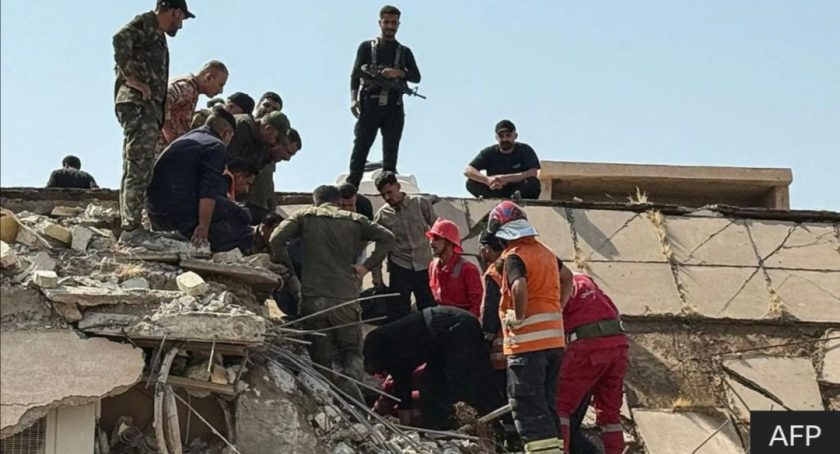
According to a briefing from US Central Command (CENTCOM), the coordinated air campaign focused heavily on dismantling specialized logistics and weapons depots. US officials explicitly blamed the Islamic Revolutionary Guard Corps (IRGC) for orchestrating the network, stating the targeted “Iran-aligned terrorists” were actively being directed to attack both localized US personnel and critical Saudi petroleum facilities in Riyadh and the Eastern Province.
Providing immediate field confirmation, Iraq’s paramilitary Popular Mobilisation Forces (PMF) announced that at least 20 of its fighters were killed and 32 others wounded as joint US-Saudi missiles battered its installations across seven provinces. PMF leaders fiercely condemned the operation as a dangerous breach of national sovereignty, while Iraqi Prime Minister Ali Falih Al-Zaidi immediately convened an emergency national security meeting to handle the mounting fallout.
The explosive retaliation followed a high-stakes standoff just hours prior, where Centcom intercepted an attempted Iranian “surprise attack” involving multiple ballistic missiles aimed at US bases in Jordan. The thwarted mid-air strike shattered a brief, fragile lull in regional hostilities, completely upending recent hopes for a diplomatic breakthrough and sending crude oil markets surging.
The high-stakes escalation kicked off on Tuesday at 17:45 EDT (21:45 GMT), when Tehran launched a volley of ballistic missiles. US defense officials confirmed the barrage was a total failure, noting that all incoming threats were “successfully intercepted” before impact.
Contrasting this, Iran’s Islamic Revolutionary Guard Corps (IRGC) claimed tactical success, asserting that their missiles deliberately targeted a US air base and an intelligence command centre in Jordan “in response to the acts of aggression of the American child-killing army.”
Simultaneously, the theatre of conflict widened into critical maritime trade corridors. The IRGC announced that its naval faction aggressively intercepted and struck three commercial oil tankers navigating the strategic Strait of Hormuz. Iranian state media claimed the vessels were targeted after they “ignored warnings” and intentionally sailed along an “unsafe and illegal route” through the heavily contested Gulf waterway.
In a swift, crushing counter-offensive, US and Saudi Arabian fighter jets launched synchronized sorties into eastern Iraq. US Central Command (CENTCOM) confirmed the warplanes pulverized “multiple terrorist logistics and weapons sites across eastern Iraq in a strong response to over 30 IRGC-directed aerial drone attacks in the last 72 hours.”
Defense officials labelled the prior drone waves entirely “unwarranted” and emphasized that they had completely failed to hit any primary assets. Issuing a stern ultimatum to Tehran, Centcom warned: “The IRGC and its terrorist proxies must cease these attacks to avoid further U.S. military response.”
By Wednesday morning, Iraq’s state-integrated Popular Mobilisation Forces (PMF) released a grim casualty update, confirming that at least 20 of its fighters were killed and 32 others severely wounded during the joint US-Saudi air campaign. PMF leadership fiercely condemned the bombardment, labelling the strikes a “dangerous escalation” and an egregious violation of Iraq’s national sovereignty.
Structurally, the PMF functions as an umbrella network of predominantly Shia Muslim militias officially absorbed into the Iraqi armed forces. However, it heavily houses prominent Iran-backed factions that Tehran has actively weaponized as regional proxies to project geopolitical influence across the Middle East. For years, these specific elements have routinely targeted US personnel to force a complete withdrawal of American troops from Iraqi soil—a cycle that has repeatedly drawn heavy US retaliatory strikes.
As geopolitical tensions hit a boiling point, Iran attempted to distance itself from the immediate fallout. An Iranian defense official, quoted by state television and monitored by Reuters, flatly denied any direct Iranian involvement in the drone swarms launched against Saudi territory. Turning the blame back on Washington, the official warned that attributing decentralized regional attacks to Iran constituted a “major miscalculation” that could trigger an unmanageable wider war.
Expanding the conflict zone on Tuesday, Saudi Arabian air defense systems successfully intercepted and neutralized a wave of explosive drones targeting vital petroleum infrastructure across the Kingdom’s oil-rich Eastern Province. Providing immediate tactical context, defense ministry spokesman Maj. Gen. Turki al-Maliki explicitly alleged that the unmanned aerial vehicles were launched by “Iran-affiliated militia groups” operating within Iraqi territory.
The explosive reignition of hostilities shattered a highly fragile diplomatic window, occurring a mere 24 hours after US President Donald Trump publicly touted “very friendly negotiations” with Iran. Up until the drone raid, the two global adversaries had maintained an uncharacteristic three-day operational lull without exchanging active airstrikes.
That brief pause in active combat had offered a momentary sigh of relief following 13 straight nights of intensive, heavy bombing campaigns conducted by the United States. During that offensive, Washington confirmed it had systematically “destroyed tunnels and bridges” across southern Iran, resulting in reports that scores of combatants and personnel had died in the targeted strikes.
Beneath the military theatre, absolute control and maritime access to the strategic Strait of Hormuz remains the ultimate, unresolved sticking point in the backchannel negotiations—secret diplomatic talks that Tehran has firmly and publicly “denied are even happening.”
As news of the failed diplomatic pause and the renewed joint theatre strikes spread, global energy markets reacted violently. Crude oil prices surged sharply early on Wednesday morning, driven by intense Wall Street anxieties that an unmanageable escalation in the conflict will severely disrupt massive global energy shipments navigating through the vital chokepoint.