
Iran’s Islamic Revolutionary Guard Corps (IRGC) Navy intercepted six merchant vessels attempting to transit the strategic Strait of Hormuz via unauthorized routes overnight, state broadcaster IRIB reported on Monday.

The maritime confrontation marks a sharp escalation in the contested waterway, signaling Tehran’s intensifying grip on global shipping lanes amid an ongoing blockade.
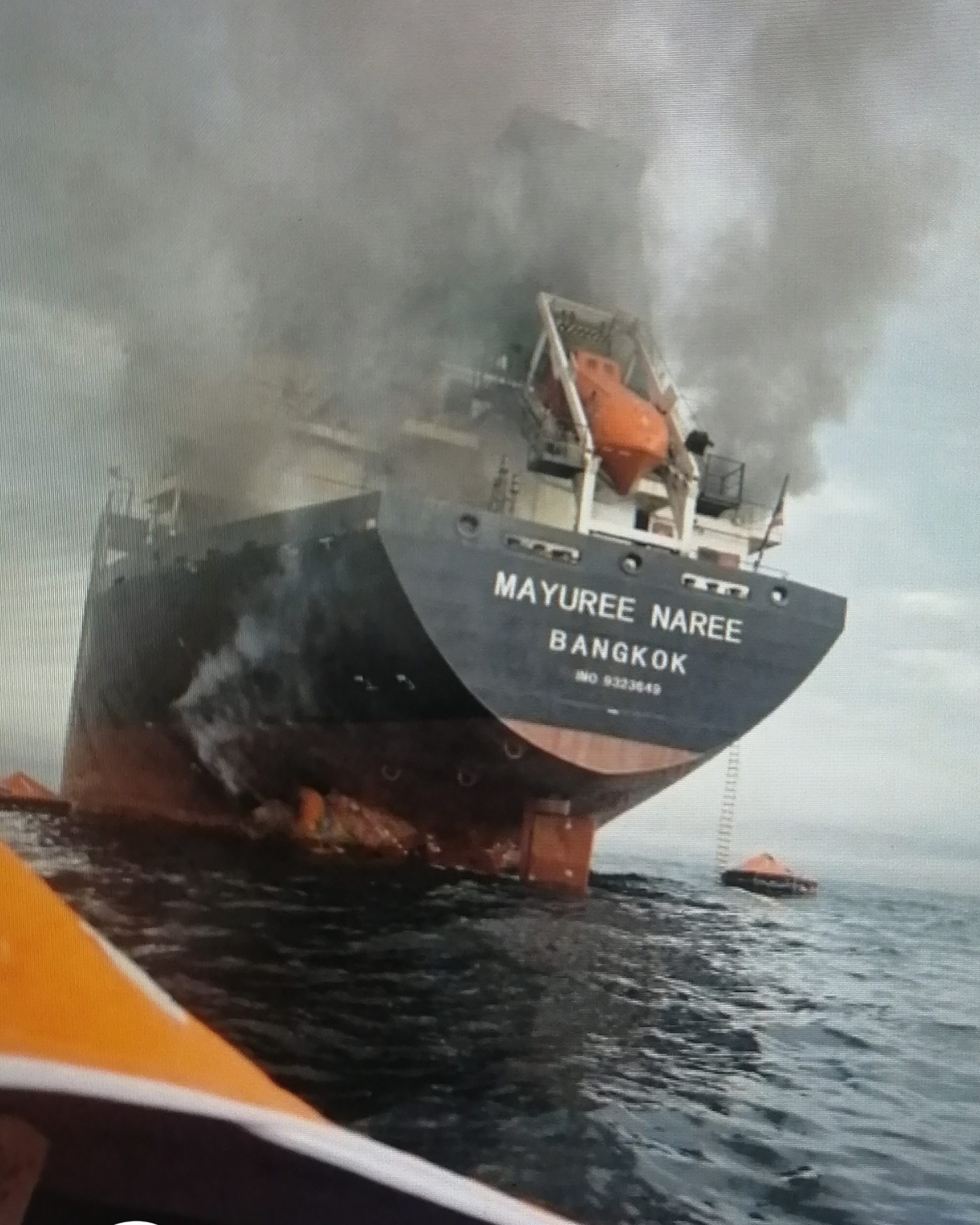
The crisis deepened further following verified reports that an unidentified commercial oil tanker exploded and went ablaze after drifting off course and striking a naval
mine.
[ SHOT ACROSS THE BOW ]
[ IRGC Navy Patrol ] ──(Warning Shots)──► [ 6 Merchant Ships ]
│ │
▼
Forced to Alter Course ▼
Enforcing Strict Blockade
According to a source cited by IRIB, the six intercepted vessels disabled their tracking systems and attempted an “illegal and unsafe” southern transit to provoke U.S. forces. IRGC naval forces fired warning shots, successfully redirecting five of the ships back into the Persian Gulf.
The sixth vessel suffered an accident, linked by Iran’s IRGC-affiliated Tasnim News Agency to a naval mine detonation after the ship left Iran’s designated maritime route.
Incident Date Vessels Intercepted Action Taken Location / Source
Saturday 4 Vessels Fired warning shots, forced back Southern Strait
Sunday Night 6 Vessels Fired warning shots, redirected / 1 exploded Main Chokepoint
The Monday report follows a similar weekend face-off. On Saturday, the Guards forced four other vessels to turn back in the southern section of the strait under identical conditions.
[ STRAIT OF HORMUZ MARITIME TRANSIT]
[ Persian Gulf] [ Gulf of Oman ]
│ ▲
│ (Warning Shots Fired) │
└─────────► [ IRGC Patrol] ───────────┘
▲
│ (Unauthorized Route)
[6 Blocked Vessels]
Tehran has enforced a highly restrictive maritime blockade over the vital chokepoint since regional war erupted in late February.
• The Justification: Iran claims its aggressive manoeuvres counter U.S. naval dominance and Western economic sanctions.
• The Mandate: According to Wikipedia’s tracking of the 2026 Strait of Hormuz crisis, the strait accounts for 20% of global seaborne oil trade, and Iran has warned that ships bypassing its approved coastal channels will be held responsible for the consequences.
The geopolitical friction is sending immediate shockwaves through global energy sectors.
While oil benchmarks recently surged past $100 a barrel on fears of total war, Euronews reported a sharp 4.66% tumble on Monday, bringing Brent crude futures down to $92.27.
This sudden price drop follows an Associated Press report via NPR detailing a strategic, two-day pause in tit-for-tat military strikes between Washington and Tehran, sparking fragile hopes for diplomatic talks mediated by Oman.
While Washington paused a 13-day aerial bombardment campaign over the weekend to allow room for negotiations, it refuses to lift its own blockade on Iranian ports.
Tehran’s Foreign Ministry remains defiant, using its leverage over the Strait of Hormuz to resist Western concessions. With regional proxy dynamics intensifying across the Middle East, the battle for global trade lanes remains on a knife-edge.