
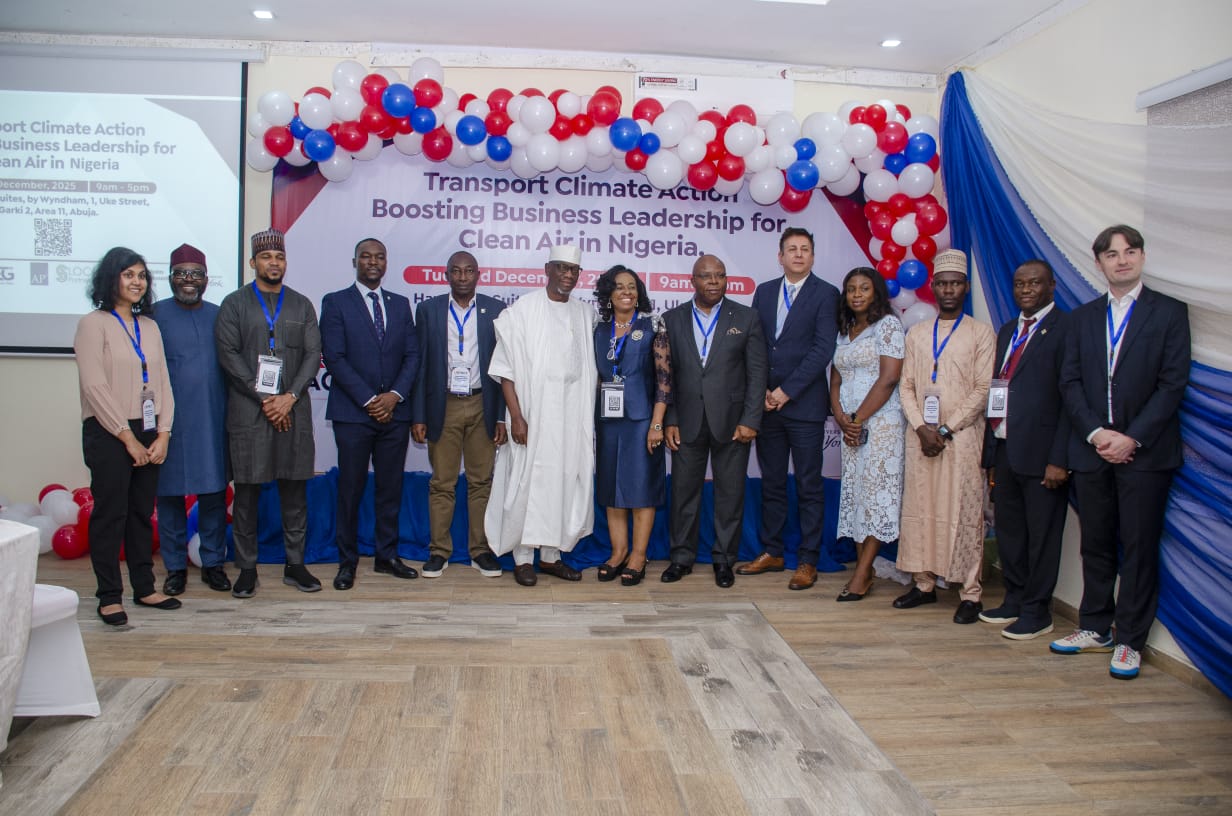
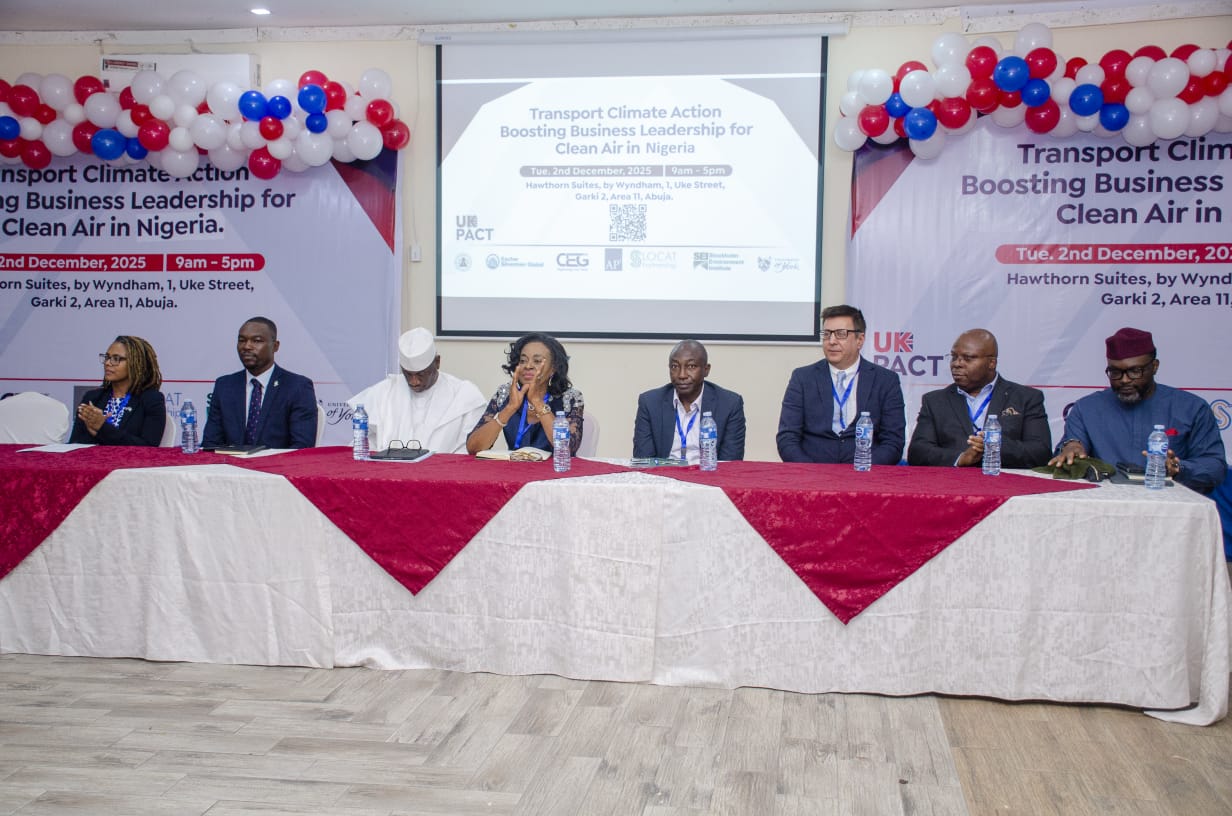
The United Kingdom (UK) PACT Drives Transport Climate Action in Nigeria. A new UK PACT project, officially launched in Abuja on Tuesday, November 2, will strengthen private sector capacity for clean-air initiatives.
The program, titled “Transport Climate Action: Boosting Business Leadership for Clean Air in Nigeria,” aims to deliver significant climate and environmental improvements.
To foster a cleaner and more prosperous future, the UK PACT has launched a collaborative initiative focused on reducing carbon emissions and driving inclusive, low-carbon economic growth, particularly within the transport sector.
Dr. Emmanuel Onwodi, Project Lead at Escher Silverman Global, affirmed that this intervention was developed to address the significant and increasing burden of greenhouse gas (GHG) emissions, uniting businesses, regulators, and civil society to tackle a critical challenge together.
Escher Silverman Global Project Lead, Onwodi, confirmed the initiative to Sooth News, identifying GHG emissions as a paramount public health and economic issue for Nigeria. Data suggests poor air quality contributes to over 200,000 premature deaths annually.
He argued that the private sector acts as both a victim and a contributor to this challenge.
Highlighting specific sectoral deficiencies, he stated:
“The transport sector is responsible for more than 15 per cent of Nigeria’s total greenhouse gas emissions but faces significant systemic barriers, including a lack of technical expertise, unclear regulatory frameworks, and insufficient access to capital for clean technology adoption.”
Also contributing, Gari Haq, Consortium Lead at the University of York, explained how the UK PACT project aims to bridge existing gaps within the transport sector.
“We are equipping private enterprises with the necessary training, tools, and policy support required to transition to low-carbon operations,” Haq stated.
He further outlined that UK PACT is a flagship UK government program specifically designed to support partner countries in reducing carbon emissions and fostering inclusive economic growth.
The 15-month project, according to Haq, will actively assist businesses in accessing climate finance and engaging in voluntary carbon markets. A core component of the initiative involves supporting the creation of finance-ready Climate and Clean Air Action Plans. It will also drive the adoption of emissions-reducing practices that are fully consistent with Nigeria’s NDC 3.0 targets and enhance stakeholders’ understanding of vital regulatory structures, including the National Climate Change Fund.
The project is designed to strengthen vital collaboration among private companies, regulators, and financial institutions.
“We are committed to integrating Gender Equality, Disability, and Social Inclusion considerations into every climate action,”
Haq emphasized. This initiative is made possible through a strategic collaboration with international partners CEG and SLOCAT, alongside Nigerian-based firms Escher Silverman Global (ESG) and AP3 Advisory.
Also commenting, Mr. Ibrahim Shelleng, Senior Special Assistant to the President on Climate Finance and Stakeholder Engagement, stressed that climate change is now a lived reality across Nigeria’s cities, farms, industries, and communities. Citing extreme heat in the north, severe flooding in coastal states, and worsening air quality in major hubs like Lagos, Abuja, Port Harcourt, and Kano.
Shelleng asserted that these challenges also present a vital opportunity to mobilize the private sector’s creativity and dynamism.
“Our industries, SMEs, financiers, manufacturers, agribusinesses, logistics companies and technology innovators have a central role in driving the transition to a cleaner, healthier and more resilient economy,” he stated.
Shelleng further emphasized that Nigeria’s climate and clean-air ambitions are unachievable without an empowered and committed private sector. He underscored the platform’s role in this transition:
“This platform deepens understanding, builds capacity, shares practical tools and strengthens collaboration.
“It allows us to explore priority areas such as integrating climate-smart business practices, adopting clean-energy technologies and accessing climate finance, including carbon markets, green bonds and blended-finance instruments.”
Ultimately, Shelleng concluded that aligning private sector strategies with national climate commitments will be instrumental in reducing emissions, improving air quality, and ensuring Nigeria’s competitiveness in a global economy increasingly driven by sustainability.