
…. Recalls defying military orders to ensure Bola Tinubu became Lagos Governor.
The National Drug Law Enforcement Agency (NDLEA) Chairman/Chief Executive Officer, Brig. Gen. Mohammed Buba Marwa (Rtd) has called on Nigerians to safeguard the country’s diversity, framing it as an essential gift rather than a burden. He insists this national trust requires collective effort to maintain unity and drive progress.
In a statement released Saturday, NDLEA Director of Media & Advocacy Femi Babafemi announced that Chairman Marwa made the call for unity while delivering a keynote address at a book launch in Abuja.
Marwa said the gathering held a “special significance” for him due to its profound and compelling nature. What moved him most, Marwa explained, was not only the book itself but the life of its author and what that life represents.
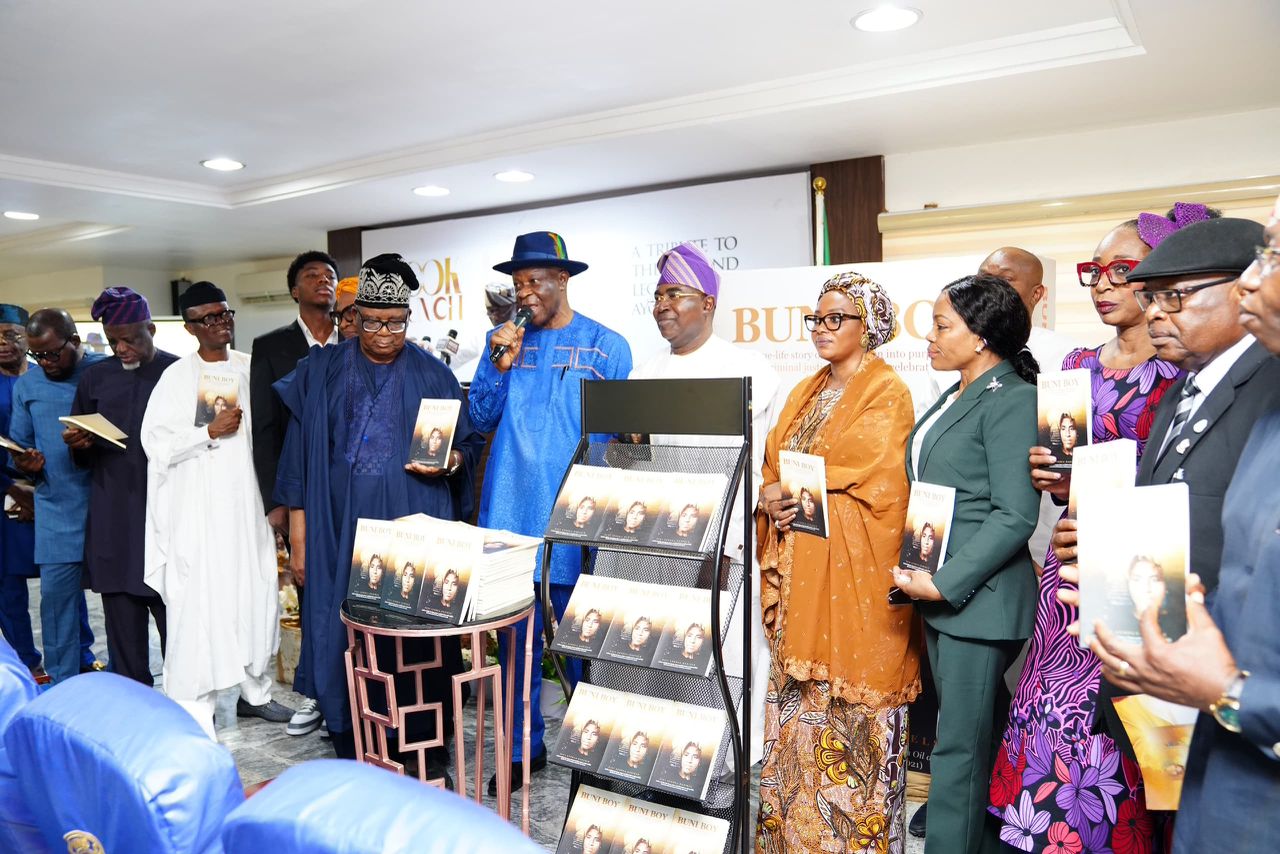
“It speaks to the unity and strength woven through our diversity as Nigerians,” he stated. “To many people, the author’s narrative may seem distant, almost unreal, as if drawn from another world. Yet those of us who grew up in the 1960s know it as lived truth… mirrors the country we once walked through with unguarded hearts.
However, Marwa explained that the story serves as a stark reminder of a simpler time, prompting him to reflect on the nation’s direction. He went on to share this core reflection:
“the story stirs my memories and reminds me of a time when life was plain in its blessings and people showed more kindness in their daily dealings. This evening, I am not here to retell the story, for it stands strong on its own. Instead, I will reflect on its core theme, to remind Nigerians of this era that our diversity is not a burden but a gift and a trust we must safeguard.
“I have long been an advocate of unity in diversity and of the strength that rises from it. Hence, today’s occasion provides me an opportunity to further amplify the message. The Nigeria of my youth understood its own diversity, even in the troubled days of the 1960s when the civil war raged through this country. I recall my teenage years at the Nigeria Military School, NMS Zaria, where the pupils came from diverse ethnic backgrounds.
Marwa drew on personal history to illustrate his point, starting with his time at the Nigerian Military School Zaria (NMS), where students represented every corner of Nigeria:
“It was never a school for northern boys alone. No, not a school for Hausa, Fulani, Kanuri, Tiv or Idoma. It was a school for all ethnic groups in Nigeria. Whether you speak Hausa, Yoruba or Igbo, we regarded ourselves as kin. Our teachers reflected the same broad mix. For instance, from 1966 to 1970, the Commandant of the NMS was a Yoruba officer, Col. T. B. Ogundeko, of blessed memory. We didn’t see him as a Yoruba man. We saw a Nigerian, a man with whom we have a shared identity.
He further reflected on his mobile upbringing as a soldier’s son:
“Before attending NMS, however, I had my primary education across four cities: Zaria, Enugu, Abeokuta, and Lagos. This was the result of my father’s mobile life as a soldier. Living in different sociocultural settings taught me early that people of other tongues and traditions are still my own. That truth has stayed with me ever since.
Speaking further on his over three-decade stewardship as an army officer, the anti-drug boss said:
“The Nigerian Army, where I served for over 30 years, is built on a foundation of unity, and the ideal of one Nigeria shapes its work. That experience only strengthened my conviction. As an officer, I served across the country and built bonds that cut through the artificial barriers created by our sociocultural differences. In the army, intermarriage and close fellowship pushed us to look past ethnic lines and stand together as one.
Marwa emphasized that personal experience reinforced his conviction that diversity is enriching. He articulated this using a deeply personal reflection:
“On a personal note, my life has taught me that the diversity of this country enriches us. It sharpens our understanding of one another. It strengthens the fabric of our shared existence. It unites far more than it divides, whatever the voices of doubt may say today.
He continued by illustrating his point with examples from his own life, from his wide circle of friends and professional colleagues to his thirty-plus chieftaincy titles:
“In my private and professional life, I have always embraced the full breadth of Nigeria’s diversity. My friends come from every corner of the country. I have worked with people of every ethnicity. The people around me, even today, reflect the wide spectrum of our multiethnic nation. The chieftaincy titles I hold, more than 30 in number, show that same reach. Even my own family reflects our national mix. Wherever I stand in this country, whether among the Ogoni, or Bachama, among Igbo or Idoma, anywhere at all, I am at home.”
Recalling his time as the Military Administrator of Lagos state, Marwa noted the significant support he received from the Yoruba people, which contrasted with the prevailing hostility toward the federal government. He credits this encouragement with his decision to conduct a free and fair election that determined his successor:
“Even though the Head of State then Gen. Abdulsalami Abubakar did not interfere in my conduct of the governorship election, the military hierarchy did. After seeing the then Senator Bola Tinubu’s strong campaign and popularity, the military hierarchy instructed me to prevent him from emerging governor because of his pro-democracy activism in NADECO against the military government then but I chose to conduct a free and fair election that produced the most popular candidate as governor of Lagos state.The rest today is history”,
he stated.
While conceding Nigeria has “peculiar challenges” from historical mismanagement of its diversity, Marwa was emphatic that “these difficulties cannot justify any idea of tearing the nation apart”, adding that “our challenges should instead push us to repair the fault lines and pursue greater inclusion.”
Speaking on the book Buni Boy, Marwa commended the author’s widow for keeping her late husband’s memory alive. He shared how the story resonated personally with him:
“Barrister Niyi Ayoola-Daniels is no longer with us, but his legacy lives on. The Buni Yadi Foundation keeps his ideals alive. I must say that the real-life story told in the book resonates deeply with me. This is not only because I once served as the military governor of the old Borno, where Buni Yadi was then located, but also because I have met the family of the noble Alkali, the judge whose sense of duty anchors the book and shaped the author’s life. It is also because the transformation of an eighteen-year-old boy in the 1960s and the wisdom of a judge who held firmly to justice reflect the very heart of the Nigerian spirit.”