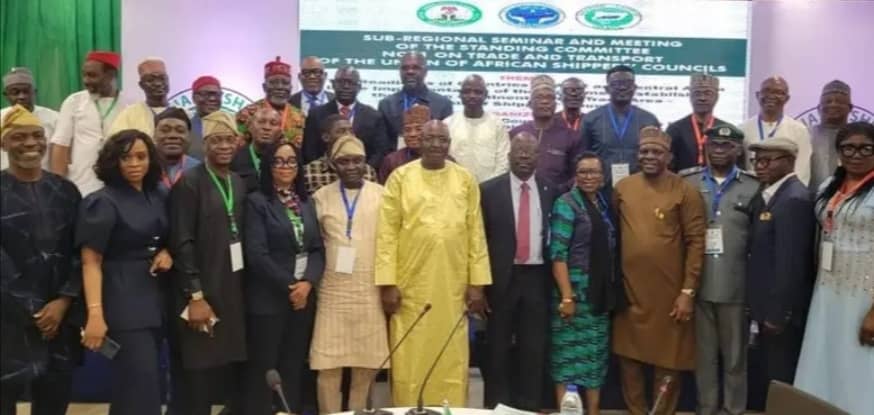


The Hon. Minister of Marine and Blue Economy, Adegboyega Oyetola, CON has called on member States of the Union of African Shippers’ Councils (UASC) to engage shipping lines and international partners to ensure transparency, fairness, and equity in the determination of surcharges and freight rates.
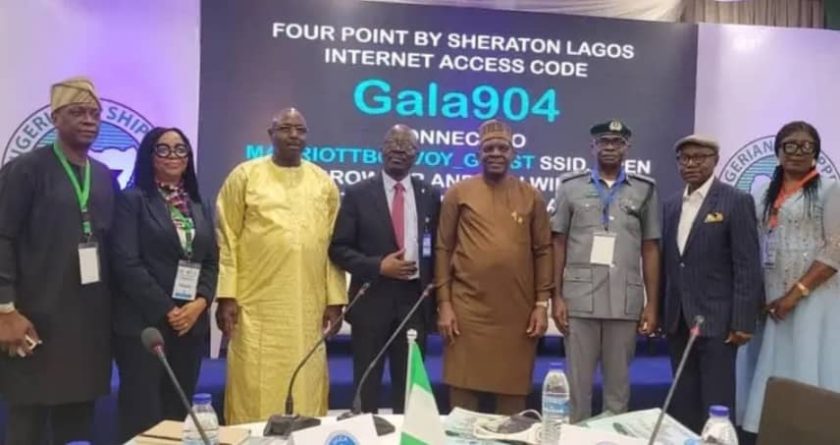
Oyetola made this statement in Lagos when declaring open a two-day subregional seminar and meeting of the Standing Committee No 1 on Trade and Transport of the UASC on Wednesday, October 29 2025.The event brought together delegates from 19 member-countries, heads of maritime and trade agencies, development partners, and key players in the logistics and transport sector to discuss strategies for improving trade readiness under the African Continental Free Trade Area (AfCFTA).
Speaking on the theme, “The Readiness of Countries of West and Central Africa in the Implementation of the Agreement Establishing the AfCFTA — The Role of Shippers’ Councils,” the Minister, was represented by the Permanent Secretary of the ministry, Mr Olufemi Oloruntola stressed the urgent need to address persistent challenges in port logistics, trade facilitation, and shipping cost regulation to fully harness the benefits of AfCFTA.
Oyetola emphasized that national Shippers’ Councils across the sub-region must rise to their responsibility as economic regulators and advocates for shippers’ interests. By ensuring transparent shipping practices and fair freight rates, the Minister said, Shippers’ Councils can help reduce trade costs and enhance the competitiveness of African exports in global markets.
He described the AfCFTA as a game-changing opportunity for Africa’s economic transformation, offering access to a single market of over 1.4 billion people and a combined GDP exceeding $3 trillion. He, however, warned that without addressing logistics inefficiencies and unfair shipping practices, many African economies risk being left behind.
Oyetola however called on UASC member countries to leverage the ongoing seminar to strengthen regional collaboration, share best practices, and develop harmonized policies that would enhance competitiveness across the sub-region.
The Nigerian Shippers’ Council (NSC), our Port Economic Regulator continues to implement policies that strengthen port efficiency, multimodal transport connectivity, and digital trade facilitation. These initiatives are designed to ensure that Nigerian ports and transport corridors serve as competitive gateways for intra-African trade under the AfCFTA framework.
“We also recognize the importance of fostering regional collaboration in the development of transport corridors, inland dry ports, and logistics hubs. A case in point is the Kaduna Inland Dry Port, which supports both domestic and transit trade for landlocked countries. Such projects demonstrate Nigeria’s commitment to bringing shipping and logistics services closer to the hinterland and promoting regional trade inclusivity.”
“Arbitrary surcharges and high freight rates continue to erode trade competitiveness, placing undue burdens on importers and exporters. It is imperative for member states, through UASC, to engage constructively with shipping lines and international partners to ensure transparency, fairness, and equity in freight rate determination.
“Our vision is to build a resilient maritime transport system that supports inclusive growth and sustainable economic development. Together, we can make West and Central Africa a model of effective cooperation and readiness under AfCFTA,” Oyetola said.
In a renewed commitment to the implementation of the African Continental Free Trade Area (AfCFTA), the Federal Government has urged member states of the Union of African Shippers’ Councils (UASC) to take a united stand against arbitrary shipping surcharges and unfair freight practices that continue to undermine trade competitiveness across West and Central Africa.
In his speech, the Executive Secretary/Chief Executive Officer of the Nigerian Shippers’ Council (NSC), Akutah Pius Ukeyima, Esq, MON, FCILT, Ph.D maintain that the AfCFTA offers an unparalleled opportunity for African nations to deepen regional integration, expand industrial capacity, and improve their participation in global value chains.
The NSC boss also stated that in Nigeria, the Shippers’ Council continues to implement policies aimed at improving port efficiency, promoting multimodal transport, and developing actionable strategies to improve trade facilitation across borders.
Expressing concern over the peak season surcharge recently introduced by some shipping lines, Dr. Ukeyima warned that arbitrary charges pose serious threats to the region’s trade competitiveness.
“Through constructive engagement at this forum, we can develop a unified regional position that promotes fairness, transparency, and sustainability in shipping practices. “Our deliberations should lead to practical measures that enhance efficiency, reduce the cost of trade, and improve the overall competitiveness of our economies,” Akutah said.
On his part, the Secretary-General of the Union of African Shippers’ Councils (UASC), Mr. Abdurahman Abba Kafougou, noted that the Standing Commission No. 1 (Transport and Trade) and Standing Commission No. 2 (Cooperation and Regulation) are the two technical pillars driving the Union’s mandate, emphasizing that the studies and recommendations from these bodies are essential to UASC’s operational effectiveness and policy direction.
According to Kafougou, the ongoing Lagos meeting is being held alongside a mini sub-regional seminar on the African Continental Free Trade Area (AfCFTA), reflecting the dynamism and leadership of the Nigerian Shippers’ Council in promoting trade facilitation and regional integration.
He explained that the discussions would focus on key strategic areas, including harnessing AfCFTA opportunities for shippers, proper application of Incoterms 2020, reducing cargo delivery time and cost, and establishing reliable information platforms for shippers across borders.
Mr. Kafougou reaffirmed UASC’s commitment to fostering stronger cooperation among member Shippers’ Councils and supporting national governments in achieving the objectives of AfCFTA. He also commended Nigeria and the NSC for their leadership and commitment to advancing regional trade integration, their warm reception and continued support to UASC’s regional agenda, describing the Lagos meeting as another milestone in strengthening trade and transport cooperation among member states.
“After our last meeting in Luanda, Angola, in February 2024, this gathering in Lagos marks another step forward in our collective effort to harmonize trade practices and promote efficiency in shipping and logistics across Africa.
These issues are crucial to reducing trade bottlenecks and improving competitiveness across our sub-region. I encourage all experts present to engage in in-depth discussions that will lead to actionable recommendations for adoption by the UASC Executive Committee.” Kafougo noted.
Also speaking, the Director-General of the Nigerian Maritime Administration and Safety Agency (NIMASA), Dr. Dayo Mobereola noted that while security remains essential, true readiness for AfCFTA requires addressing broader challenges such as digitalization, infrastructure, and regional connectivity. He highlighted ongoing efforts by the agency to digitalize operations and integrate maritime processes across various platforms.
Dr Mobereola, who was represented by a NIMASA Director, Mrs Nneka Obiano, described a fully integrated port community system as an urgent necessity for achieving AfCFTA’s goals, adding that NIMASA remains committed to strengthening collaboration with the Nigerian Shippers’ Council and other UASC member countries.
While delivering his address, the Comptroller-General of the Nigeria Customs Service (NCS), Adewale Adeniyi, stressed the need to proffer lasting solutions to trade facilitation challenges across the region. He highlighted the importance of adopting appropriate pricing mechanisms for trade, ensuring competitive freight rates, and creating a sustainable system that supports the movement of goods and services across Africa.
Adeniyi who was represented by the Customs Area Controller (CAC) of Apapa Command, Comptroller Emmanuel Oshoba further noted that aligning customs procedures with AfCFTA’s framework would enhance competitiveness, reduce trade barriers, and promote economic integration within the continent.
The Minister advised the UASC that its objective should be to establish mutually beneficial frameworks that safeguard shippers’ interests while ensuring the sustainability of shipping services.